We arrived in Ushuaia (Oosw-I-uh) around noon and had a shore excursion planned. Today it was a catamaran ride to see wildlife in the Beagle Channel. After that we were going to try to find an internet cafe again.
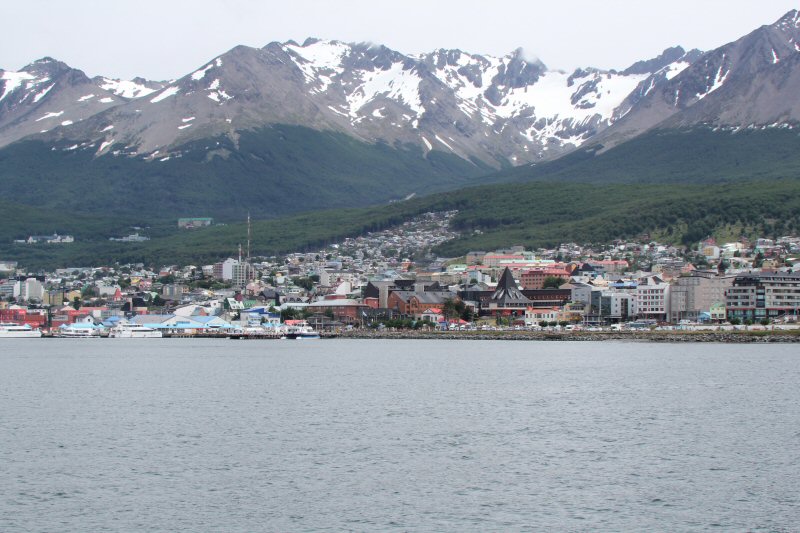
The pretty town of Ushuaia, Argentina. This is the southernmost town on the planet.
*-*-*
|
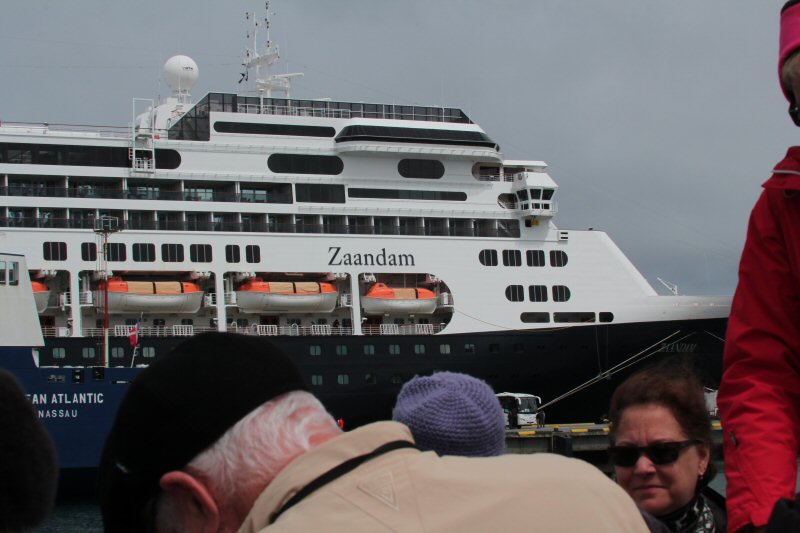
A picture showing the side of our ship.
*-*-*
|
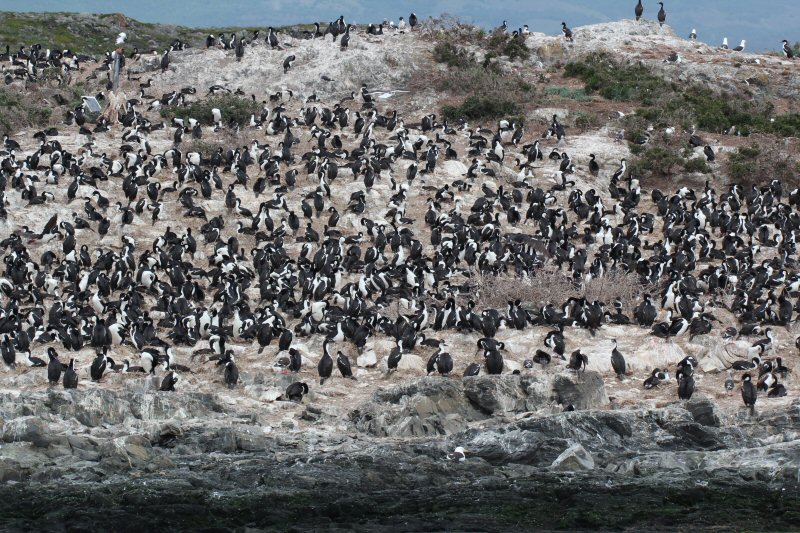
An island inhabited by cormorants.
*-*-*
|
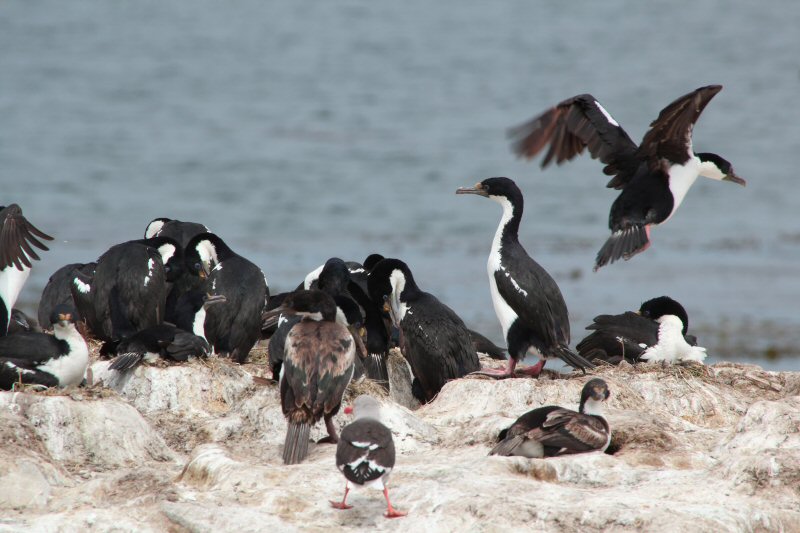
Cormorants. There are many varieties of this bird.
*-*-*
|
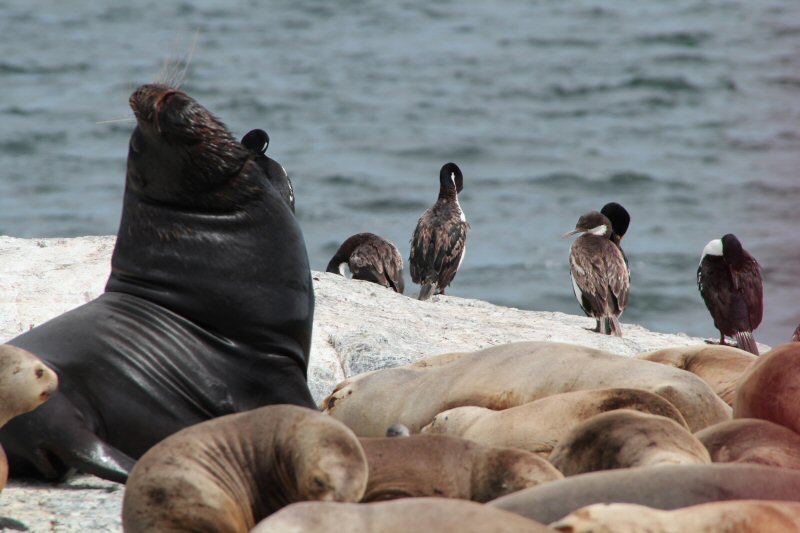
The next island was inhabited by sea lions. The males are much bigger than the females. They typically have 8-10 females in their harem. Here was one really large black male.
*-*-*
|
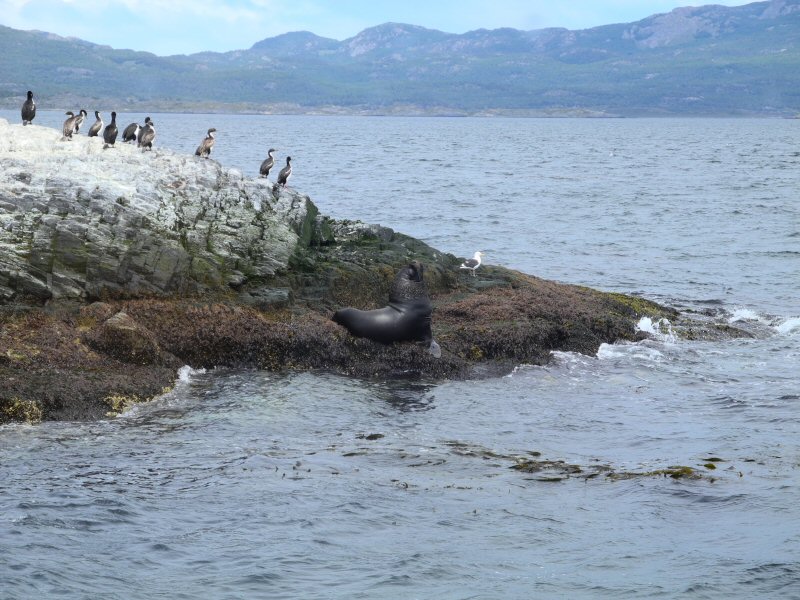
Here is a large sea lion male making his way to the water which drops off pretty sharply. One he submerged we didn't see him come back up for air for a very long time.
I am still wondering how he climbed back up on land.
*-*-*
|
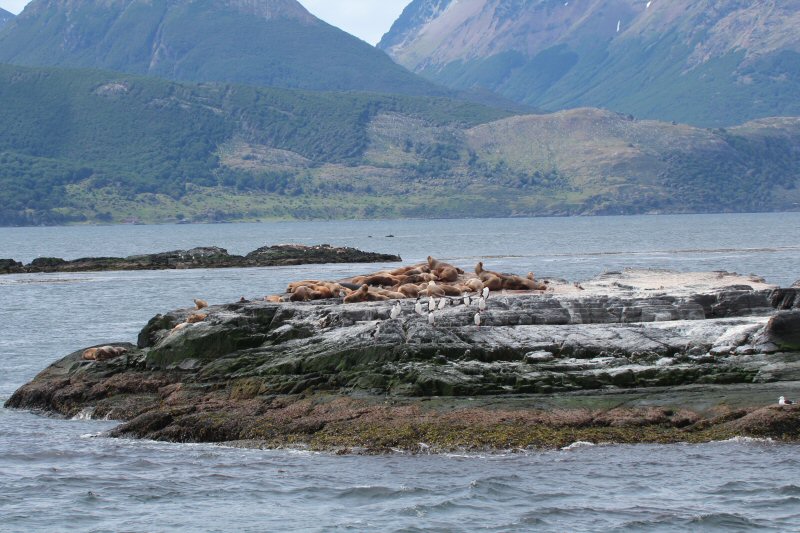
Sea Lions, when on land, are ungainly creatures who appear to do a lot of sleeping and sunning themselves.
*-*-*
|
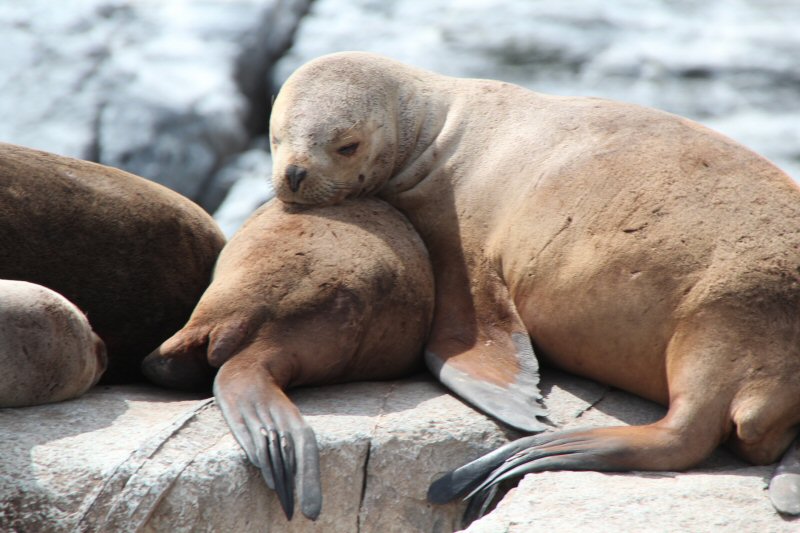
A sea lion pup.
*-*-*
|
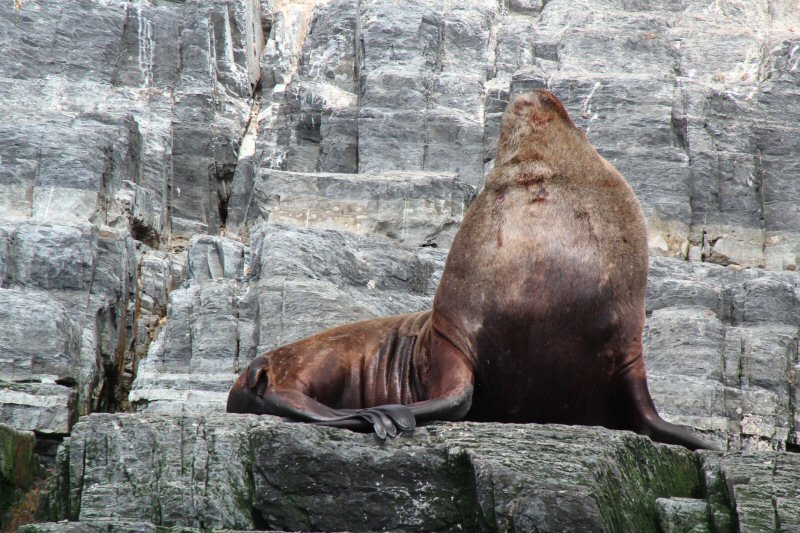
Another large male sea lion.
*-*-*
|
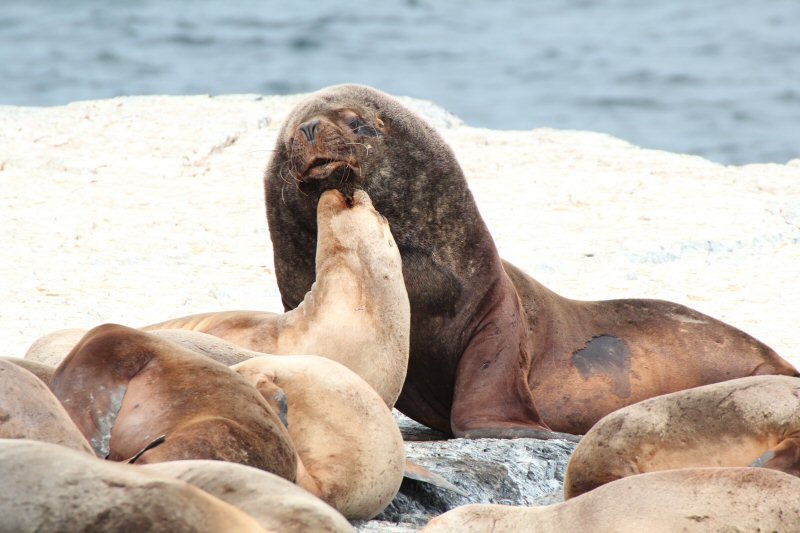
A male and female sea lion pair. Although they look like they are kissing, in reality they were nipping at each other.
*-*-*
|
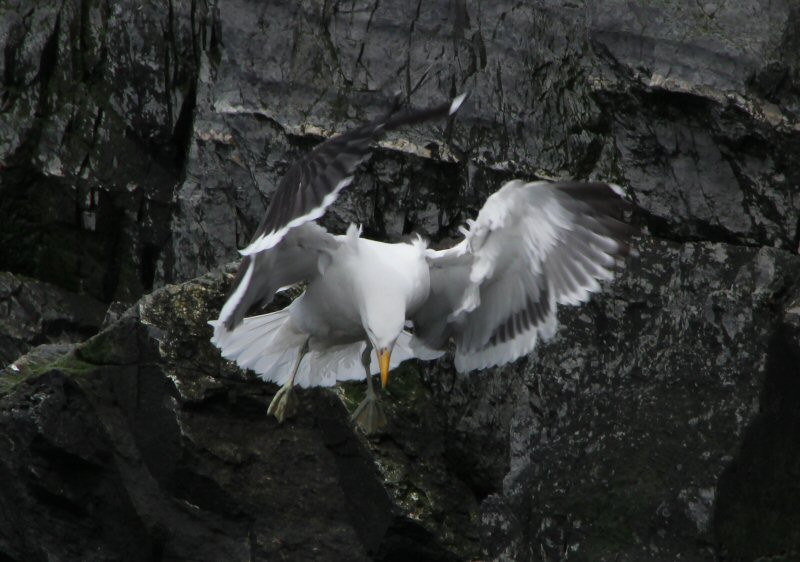
A seagull in flight
*-*-*
|

Another island had rock cormorants, These birds like nesting on rocky ledges.
*-*-*
|
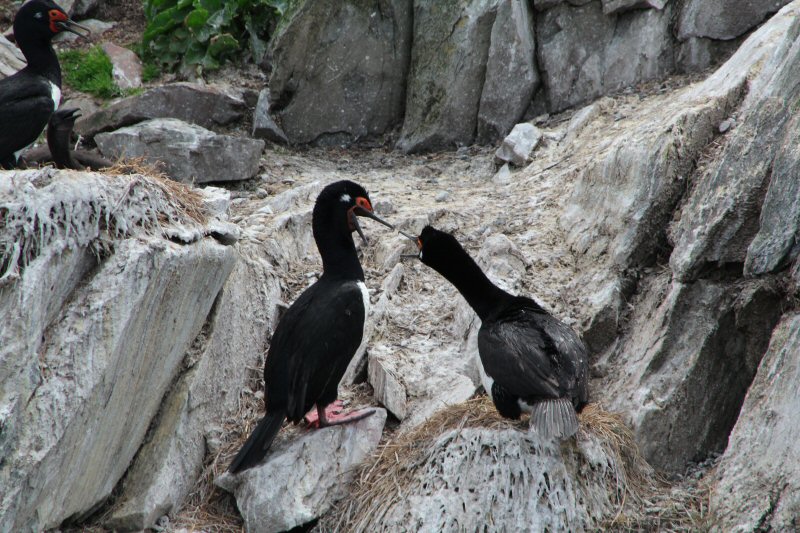
A rock cormorant feeding her chick.
*-*-*
|
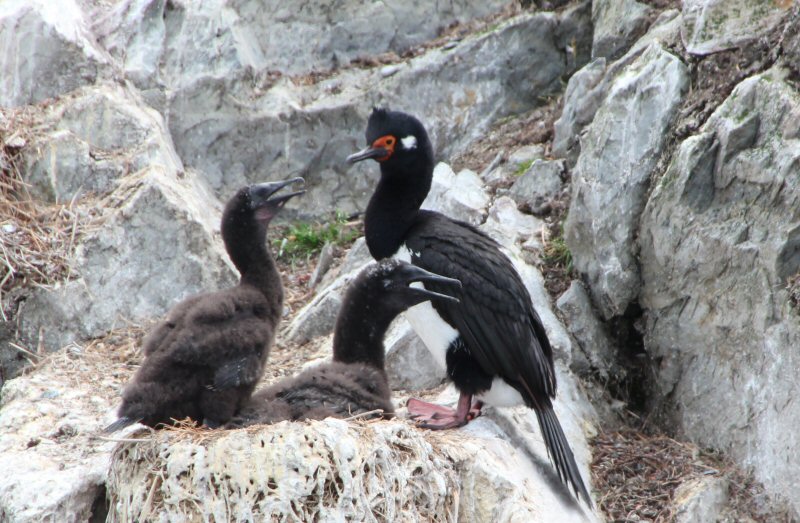
Rock cormorant nest with chicks.
*-*-*
|
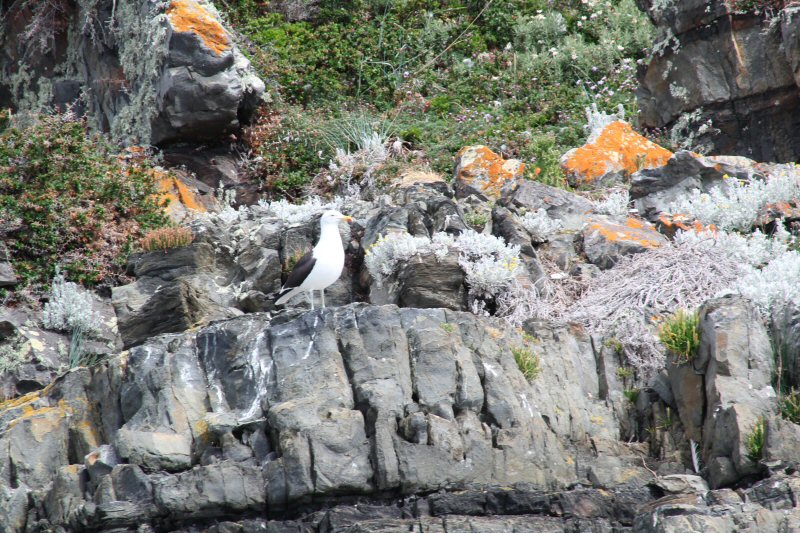
Some of the islands are covered with lichens and small plants. The orange lichen tells the natives that the air quality is good.
*-*-*
|
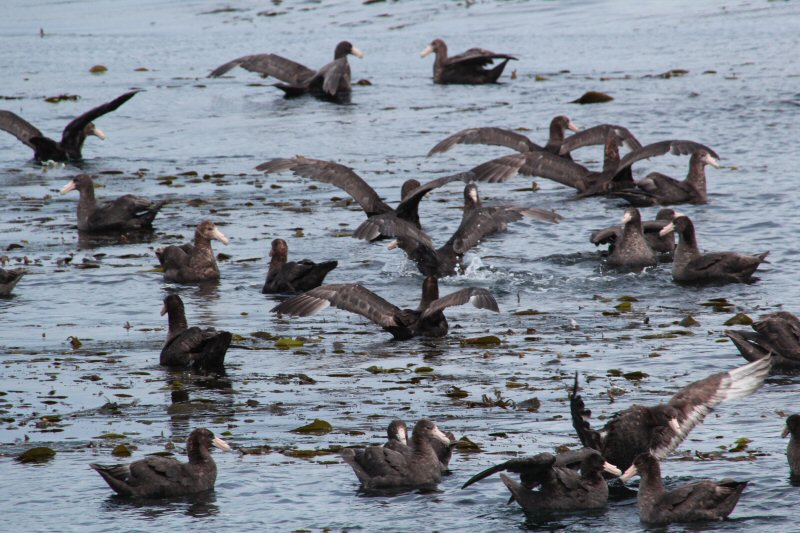
South American Petrals playing in the water
*-*-*
|
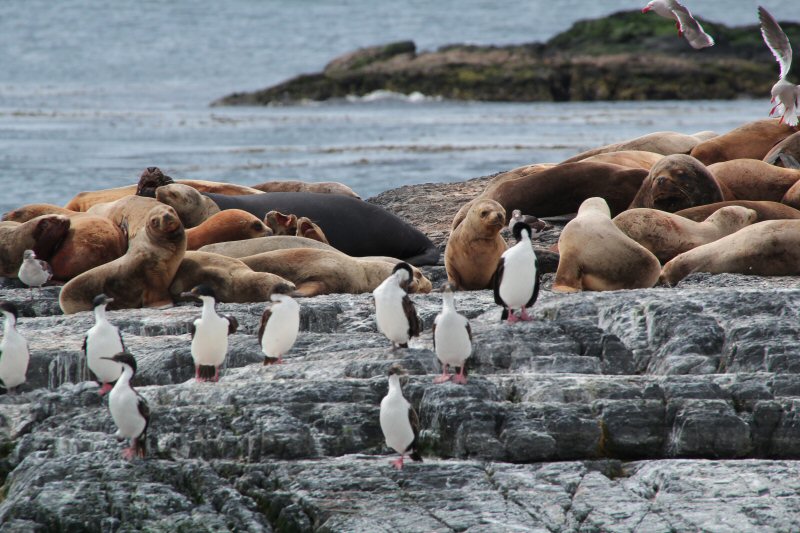
On this island the sea lions and cormorants are happy neighbors. Early sailors, from a distance, often confused cormorants with penguins because of their coloring.
*-*-*
|
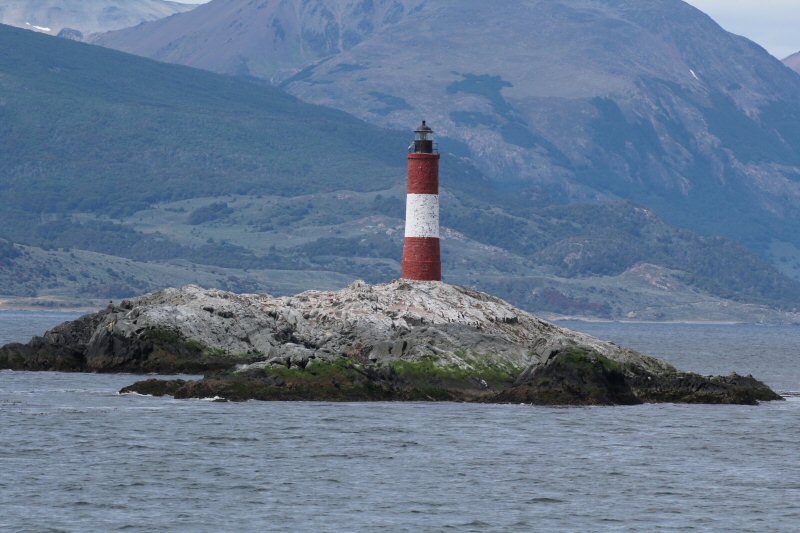
The lighthouse in Beagle Channel for entry into Ushuaia Bay - the lighthouse at the end of the world.
*-*-*
|
After the tour was over we walked through the Argentine entry point and into town. We ate dinner at a local restaurant, Andino, while accessing their WiFi. We are so obsessed with local WiFi because the internt on the ship is both slow and expensive.
Because we couldn't get Argentine pesos in Atlanta (I am not sure why) we paid in dollars and no one really had a problem with this.
Barry found a tee shirt he liked, we looked in a small handicraft market and then we headed back to the ship.
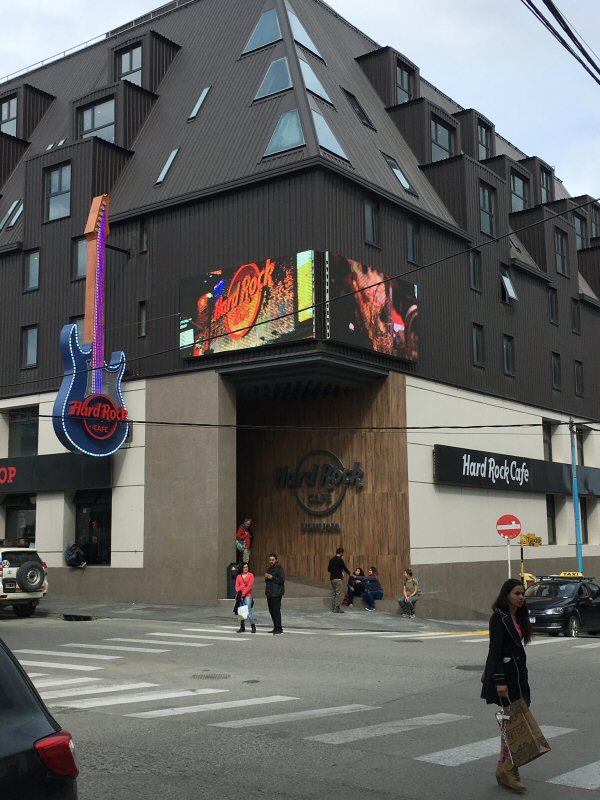
We saw a Hard Rock Cafe across from our restuarant.
*-*-*
|
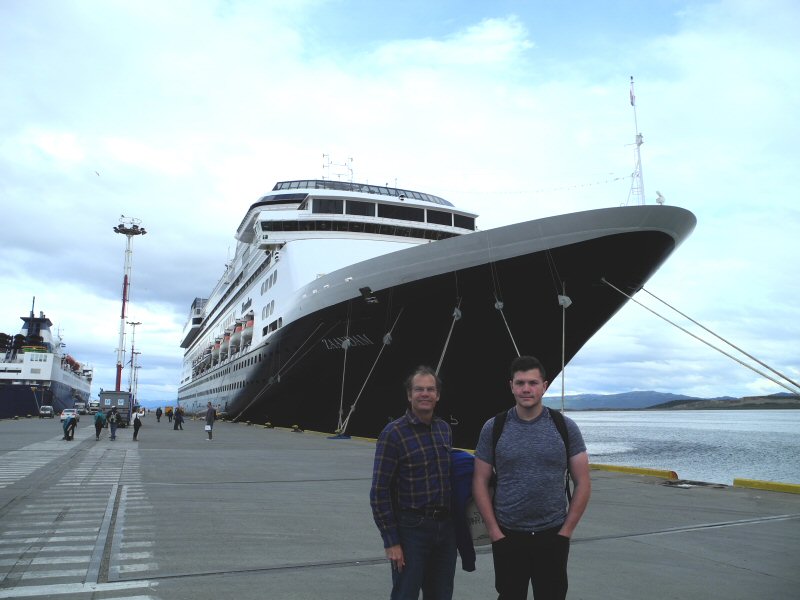
A view of our ship on the dock in Ushuaia.
*-*-*
|
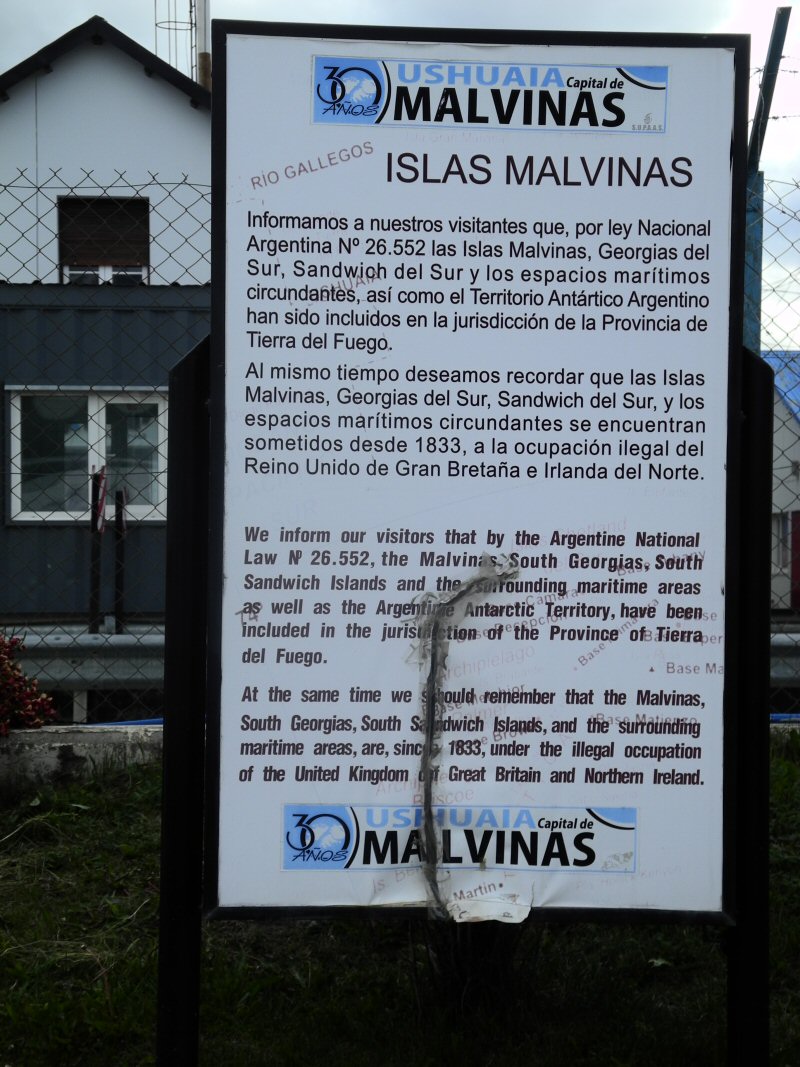
The Argentinians feel pretty strongly about the Falkland (Malvinas) Islands and this sign, on the dock in Ushuaia, sums it up. What we later learned is that the claim to the Falklands and
also to a slice of Antarctica is based on the papal division of the world called the Treaty of Tordesillas in 1506. This was long before Argentina, the country, existed or was known by Europeans.
The decree divided the world in half and gave west half to Spain and the east half to Portugal. The Argentine position is that they are grandfathered in on the Spanish coat tails.
The dividing line was settled at 370 leagues west of the Cape Verde Islands (approximately 46 degrees 30 min west) and ran from the north pole to the south pole (and around the other side)!
*-*-*
|
When we got back to the ship, it was time for group trivia. None of our usual partners were around (probably still ashore) so it was just the three of us and we WON! We got 16 out of a possible 17. It was pretty exciting.
The day ended with an announcement by the Captain that due to deteriorating weather conditions in Drake Passage we were going to shelter in a bay behind Cape Horn for 24 to 36 hours before continuing down to Antarctica. Disappointing to be sure, but better safe than sorry since he reports the seas were predicted to have 45 foot swells and 70 knot winds. Cape Horn is living up to its reputation to being one of the most dangerous waterways in the world. Well, off to bed and we'll see what tomorrow brings.
Dec 24, 2017: Christmas Eve. This morning we were supposed to sail past Cape Horn at 5:30 AM but after the Captain's announcement of last evening about the impending bad weather we weren't sure where we would be this morning. Barry and I got up anyway so as not to miss the Cape Horn narration, if it happened. We found out that we were in a sheltering bay between the Tierra Del Fuego archipelago and the islands chain which includes Cape Horn. Surprisingly it was a beautiful, sunny somewhat clear morning. We stayed up for a while in the Crow's Nest, ate breakfast and then went back to bed.
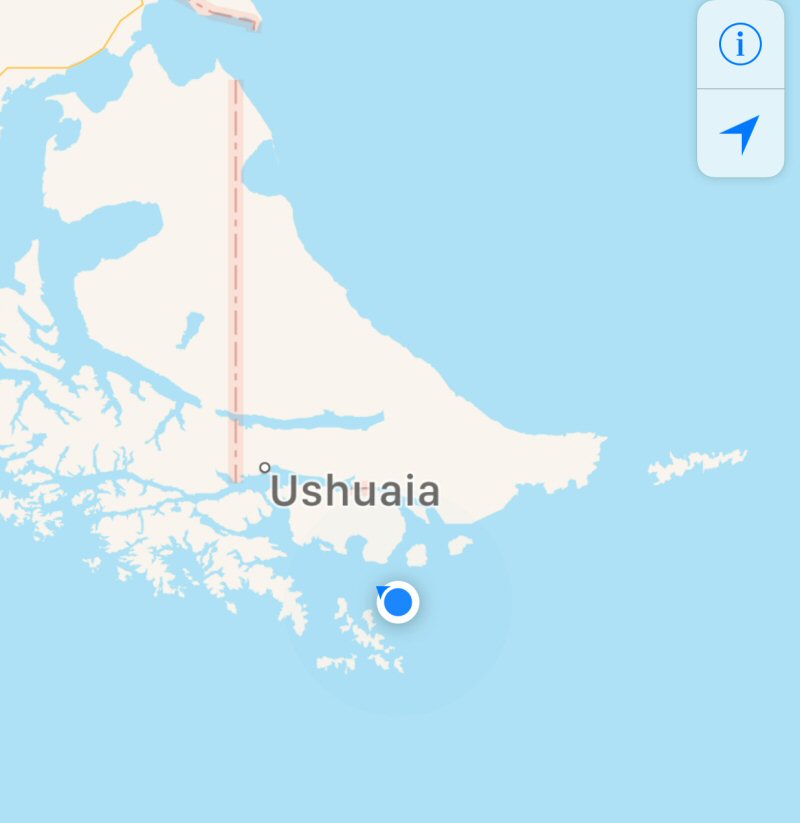
The bay on the southern tip of South America which provided shelter on Christmas Eve!
*-*-*
|
We did wake up in time to catch a wonderful presentation by Dr. Peter Carey on "A Beginner's Guide to Penguin Appreciation." He is the on-board Antarctic Expedition Team Leader. He updated us on the status of the cruise and showed us a wind map of today versus tomorrow in the southern region of South America which helped explain the delay. There is a weather system with 70+ knot winds pushing down the west coast of South America and coming around the tip today. By tomorrow afternoon the winds are predicted to drop to more in the 30 to 50 knot range and we can turn south. Even with that, the seas could be pretty rough but passable. The bay that we are in is very sheltered and appears to be a safe place to be. I think we all have a better appreciation now for the Strait of Magellan and the Beagle Channel and why they were so very important to early mariners.
The ship did lazy circles all day in the bay we were sheltered in. Most of the time the water was pretty calm, but there were a few bouts of rough seas and high winds. The skies were mostly overcast, sometimes foreboding and very dark with a few bouts of sun peaking through.
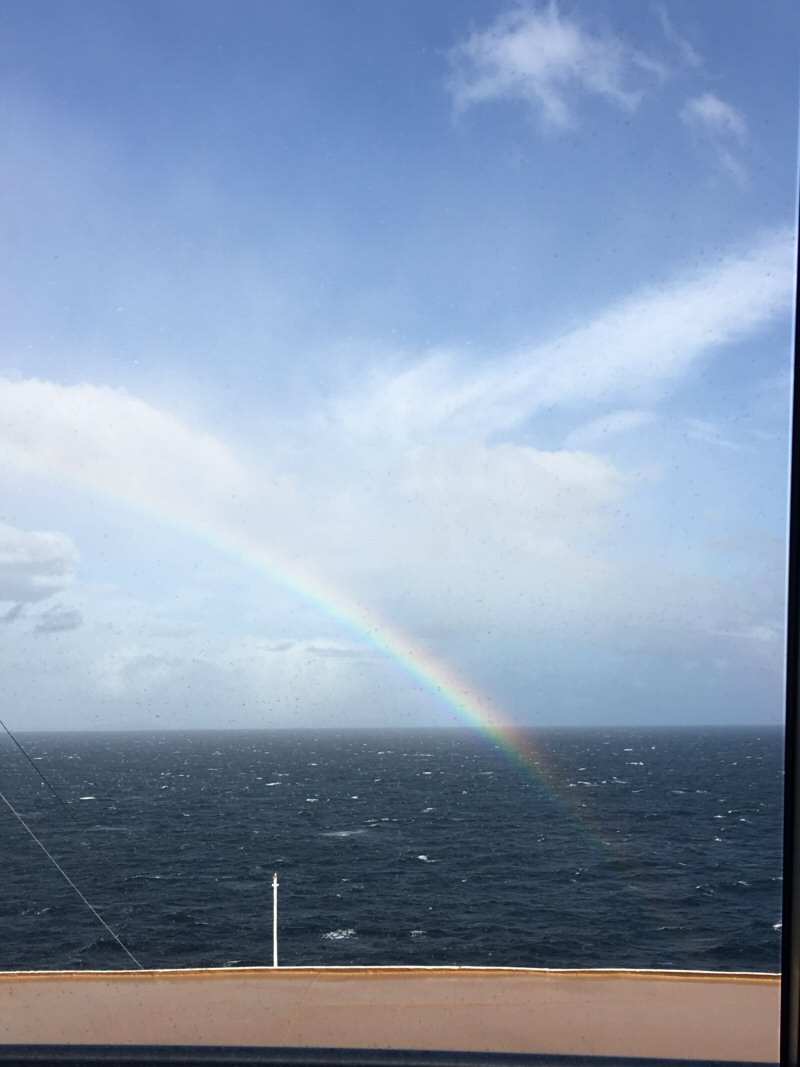
We saw this beautiful rainbow from the Crows Nest that went all the way down to the water. You could even see the indigo band!
*-*-*
|
We attended a terrific lecture by Gabriela Roldan on the 1958 Antarctic Treaty governing the multinational presence. It also covers the criteria for claims, ethical conduct of research, being good stewards of the environment and how things are decided by consensus.
Barry worked out, we read, I worked on the blog, and spent a quiet day recovering from the whirlwind of activity from previous days. As per family tradition, we sought out the only
Mexican food on the ship for Christmas Eve dinner and ate in the taco bar on the Lido Deck by the pool. After that we played team trivia again but didn't fare as well today and then went in search of
pecan pie. It was served in the formal dining room at dinner and we hoped it would also be on the Lido buffet but it was not meant to be! Off to bed with visions of suger plums dancing in our heads!
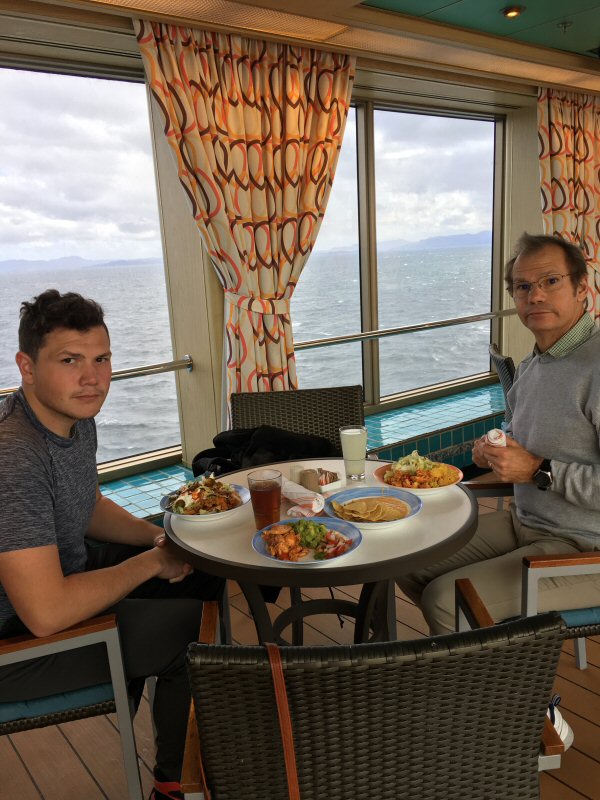
Our traditional Christmas Eve dinner - Mexican Food!
*-*-*
|
Dec 25, 2017: Merry Christmas from the end of the World! The boat was decorated in lovely Christmas fashion, there are Christmas carols playing everywhere, everyone you run into in the hallway
wishes you a Merry Christmas and Santa Clause arrives on the Zandaam at around 9:30 AM. Many of the passengers (including us) have decorated their doors for the holidays. It is wonderful.
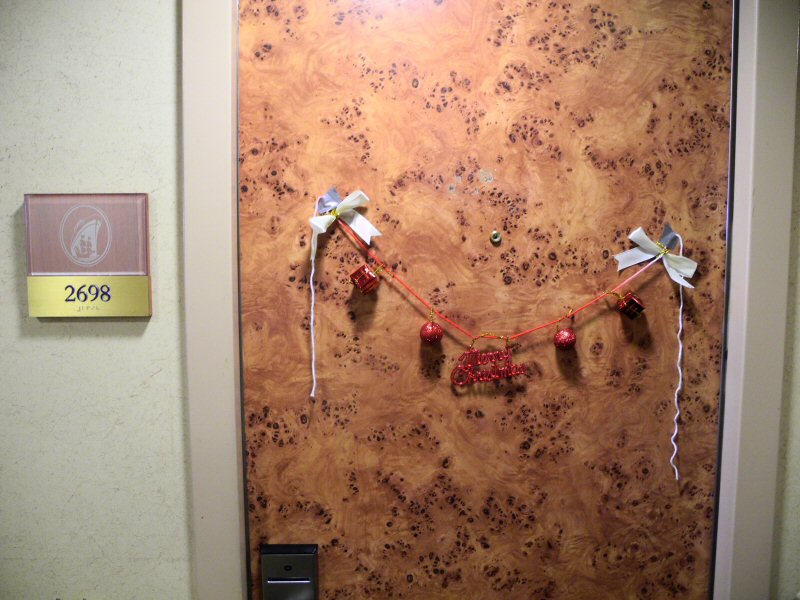
Our door decorations - unfortunately we hadn't prepared before we boarded, so it was a bit improvised. But we had fun!
*-*-*
|
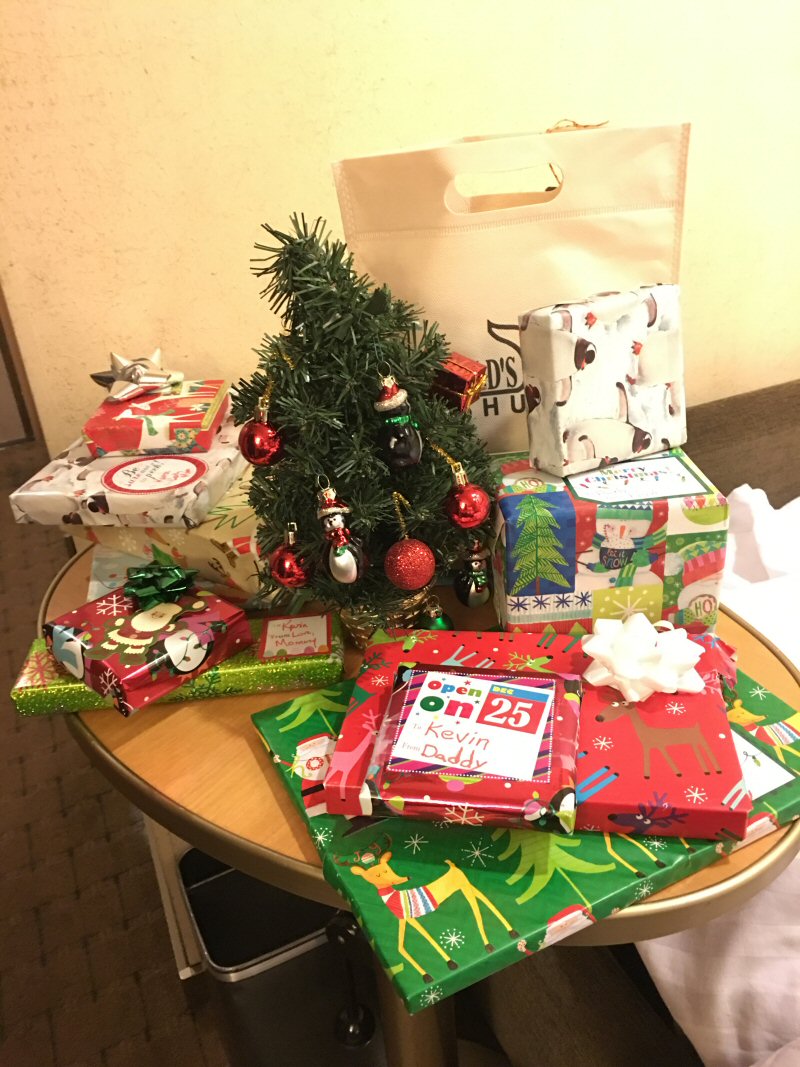
Our Christmas Tree and Presents!!!
*-*-*
|
Good News! The Captain has announced we are headed out of our sheltering bay bound for Cape Horn about 3 PM. Then we will turn south for Antarctica this afternoon. The mood on the ship can best be described as excited!
This morning was another lecture by Dr. Peter Carey on the "Discovery of Antartica." It was fascinating lecture from Ptolemy's conjecture in 200 BC that there was a land at the south of the globe
to the label of Terra Australis Incognito in the middle ages to the first sighting in 1820 by whaling ships. The real discoveries and expeditions occured in the late 1800's until about 1920, the
"Heroic Age of Discovery". Then after World War II the U.S. Navy undertook to perform extensive aerial mapping and further discovery of the continent. Other countries also had expeditions throughout the 20th century.
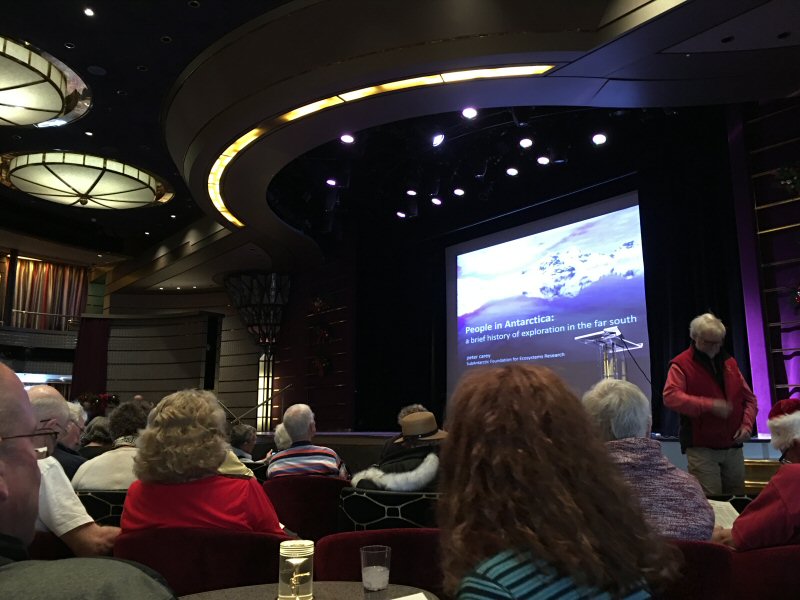
Attending a lecture in the Mondriaan Lounge
*-*-*
|
After leaving the shelter of the bay, we went southward along the group of islands which make up the southern tip of South America and then turned westward to cruise along the shore. We could see peak that marked Cape Horn, named for a Dutch explorer, in the distance.
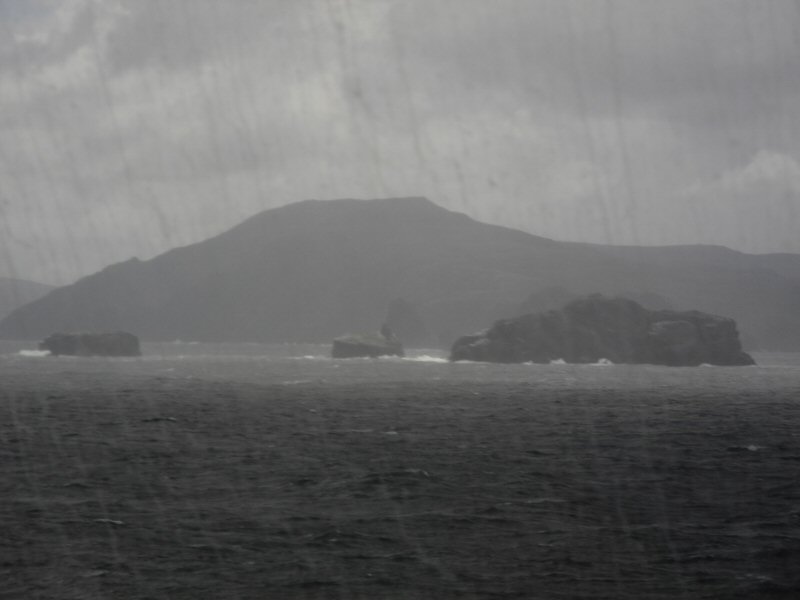
Southernmost coastal islands of South America with dark and threatening weather.
*-*-*
|
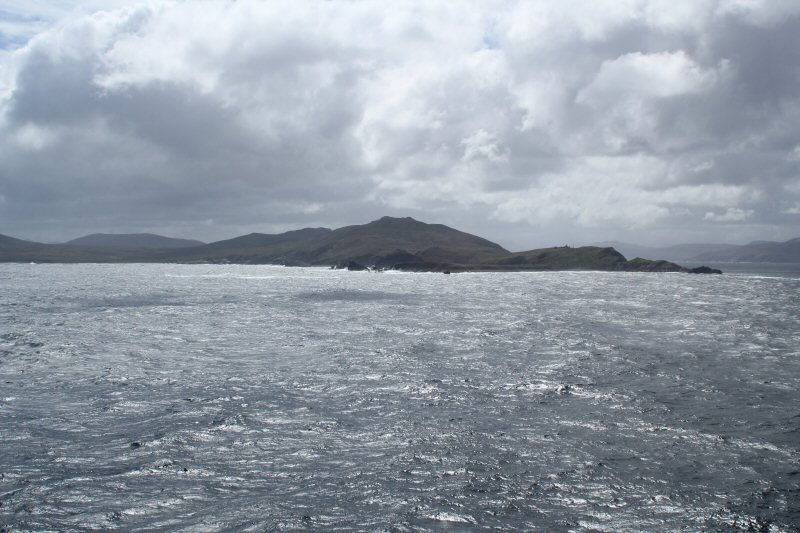
Continuation of the southernmost coastal islands of South America...approaching Cape Horn.
*-*-*
|
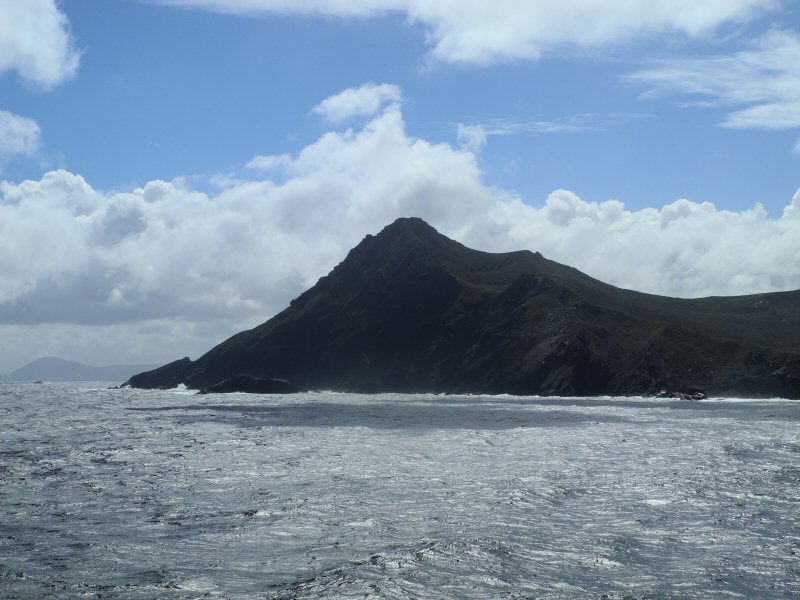
Cape Horn, South America. This is the furthest south point. This is where the Atlantic and Pacific Oceans meet. The water is rough, even in our stabilized cruise ship, the winds are very strong and the rocks are very sharp.
*-*-*
|
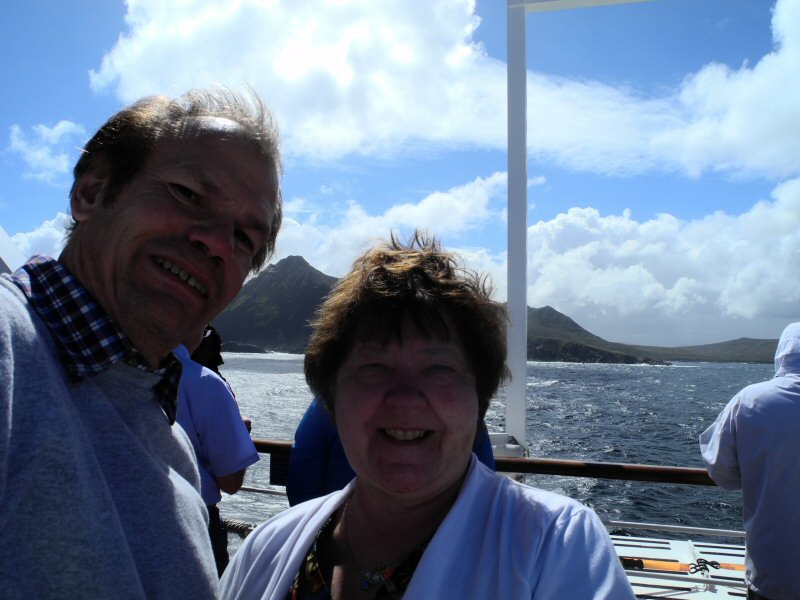
Lori and Barry standing in front of Cape Horn. The wind is strong as you can see by our hair blowing around. On an earlier trip outside it blew Barry's glasses off so they are safely in his pocket this time.
*-*-*
|