Tuesday October 22 Las Cruces to Deming to Silver City to Casitas de Gila:
We ate breakfast, checked out and got on the road about 9:15 for the drive to Deming.
|
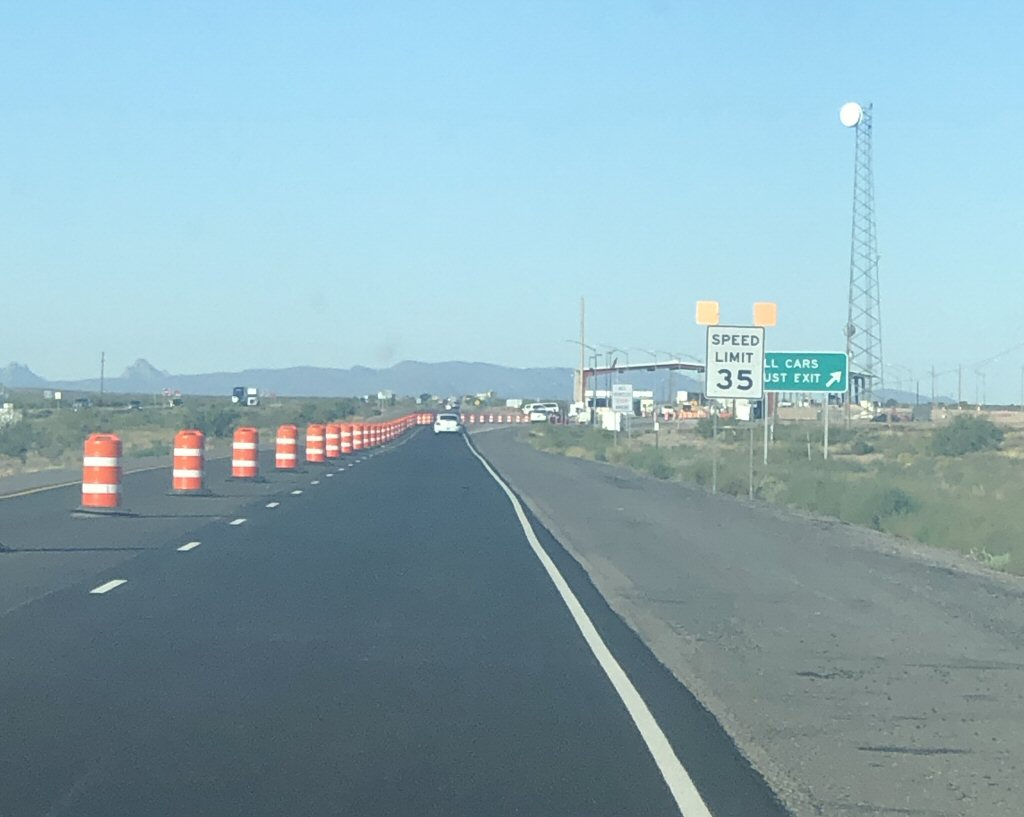
About halfway between Las Cruces and Deming, heading westbound, you run into a Border Patrol Station where all lanes of I-10 are blocked and trucks are diverted into one side and cars into the other of the check station. There is another station between Deming and Lordsburg. We also saw one on I-25 up to Hatch when we drove up to look at houses.
*-*-*
We had one more piece of real estate to visit in the Deming Ranchettes, a housing development of half acre lots south of Deming that was sold off to unsuspecting Easterners in the early 1970’s. Then Deming passed an ordinance that you couldn’t put in a well and septic tank on anything less than 2 acres because wells on half acres would deplete the aquifer and that many septic tanks would pollute the ground water. So locals started consolidating lots into larger tracts when they could track down the owners and a very few actually built houses. It was a sparsely populated housing area.
The backdrop for this part of the Ranchettes are the Florida Mountains to the south. Unfortunately, for this house, while the mountains make for a beautiful view, for astronomy the mountains completely block the southern skies. It was a gorgeous house from the outside and the owner had put together 2.5 acres, which was fenced. There was only one near neighbor and it was a new house going in. To the north and west would be lots of distant, but visible, lights from Deming. Not for us.
So we started to Silver City. Along the way we took a detour into the New Mexico Astronomy Village (NMAV). There was one man out working on his dome and we stopped to talk to him. He was very enthusiastic about the village and talked us into giving it another look. He sent us an updated plat and invited us to the their weekly Sunday brunch at Marie’s Italian Restaurant in Deming. We drove around the village some more, looked at possible house sites and talked about the complexities and sequencing of drilling a well, putting in a septic tank, pouring a foundation, setting a modular home (most houses are modular) and putting up a metal building for garage/ workshop. Not impossible but complex.
Once more we started to Silver City. We had lunch at Wranglers, a casual place a lot like Buffalos, including the peanuts. And talked some more about NMAV. We decided to make a call to the realtor and have her show us the available lots. Barry called and got us an appointment for Friday. We also tried to reach a private seller but had no luck.
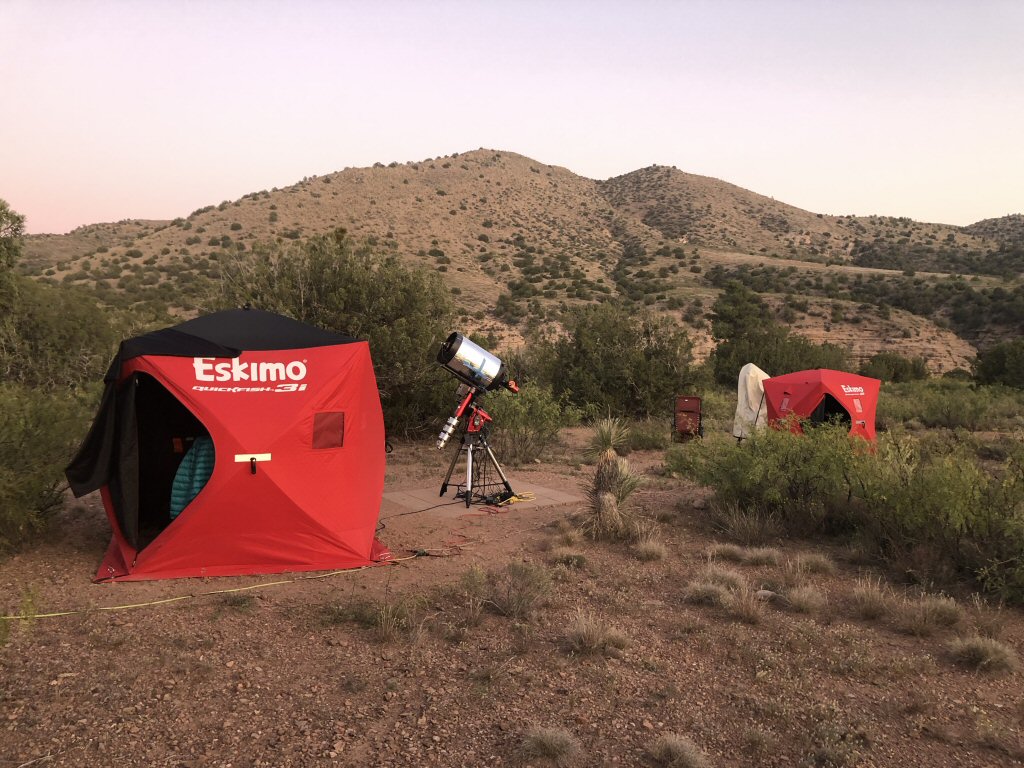
We got groceries for our stay at the Casitas and drove to Gila and up the mountain (another 5 miles of really bad gravel road). We arrived a little after 3 PM. After quickly unloading the household items into our casita, we proceeded to set up the telescope and igloo. After getting the telescope hoisted onto the mount, we split up and Barry continued to configure and connect the telescope in preparation for our first observing night, while I went back and moved us in and started prepping dinner. When I finished, I went back out just in time for powering up the scope and making sure everything was working. Then we went back to our casita for dinner and to wait for darkness.
|
A pleasant surprise was that another astronomer (Steve from Ohio) who had been here last fall when we were was set up on an adjacent pad. Last year, on his drive down, his car had been broken into and his camera and laptop stolen. Barry had loaned him our 60da DSLR camera so his trip wasn’t a total loss. We found out that his house insurance had covered most of the loss. He had bought an igloo ice shelter after seeing ours and had it set up.
*-*-*
It was a beautiful night. Very calm, gorgeous clear skies and the inky blackness of the sky. There were a million stars visible.
There were lots of scoping chores that first night - polar aligning, checking for collimation (surprisingly it didn’t need any in spite of the 1000 mile trip), and a T-Point run. We had one brief scare when we were slewing the telescope as it jammed up and locked down. When Barry checked, some cabling and a connector had jammed it. We taped the offending connector and excess cable to the telescope and, fortunately, nothing was damaged.
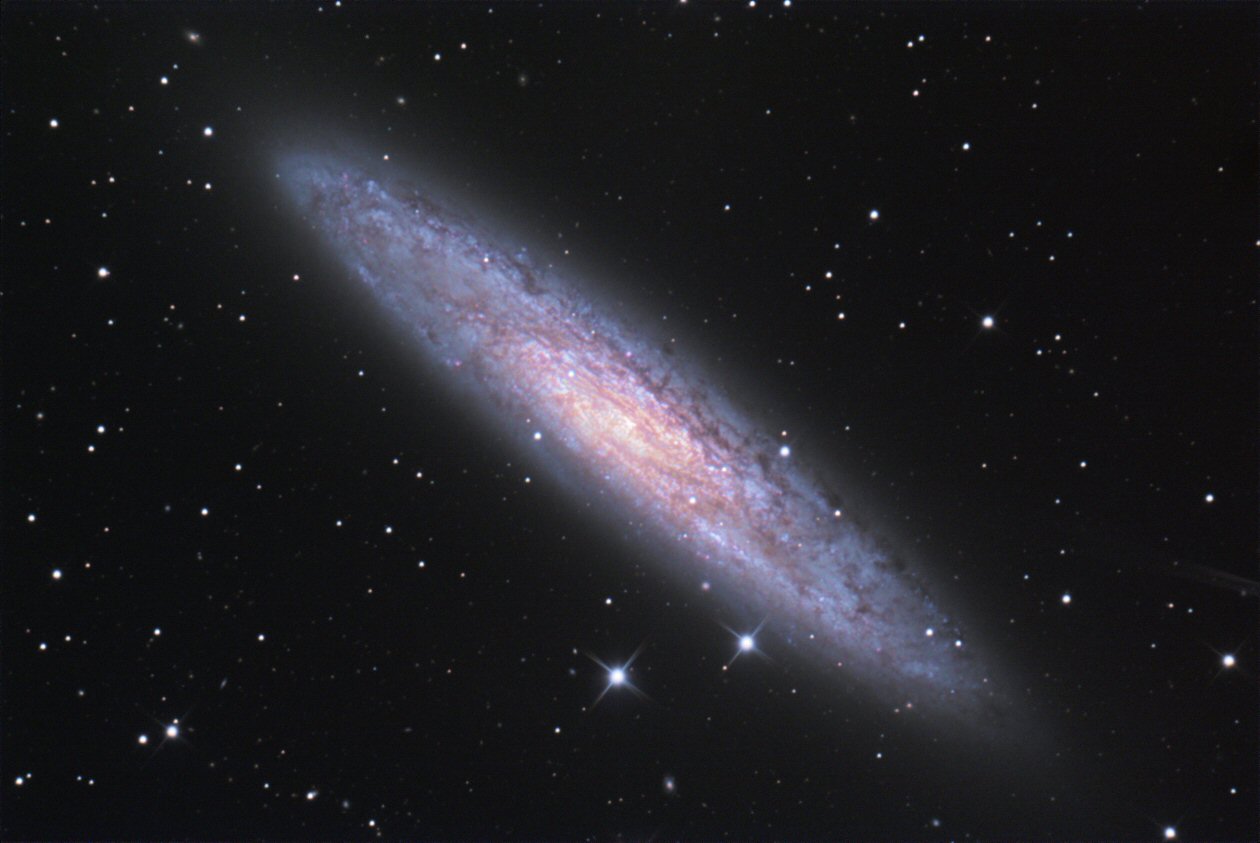
We finally set up to image NGC 253 for 3.5 hours and fell into bed. It had been a very busy day! When Barry went out to start another image, the wireless mouse was all but dead in the cold. So he shut everything down and went back to bed. We decided we needed to turn off and bring the mouse and keyboard in during the imaging periods.
|
The Silver Dollar Galaxy (NGC 253); Stack of forty-one 5-minute exposures; Celestron 14 HD Edge at F11; ZWO ASI094 One-shot color camera; Casitas de Gila in Gila, NM. 10/22/2019
*-*-*
Wednesday October 23 Casitas de Gila:
After many days in transit, we got to fix our own breakfast and dined on Yo Ho oats, an overnight oat recipes made with oats, almond milk, bananas, and blueberries and served with strawberry yogurt and fresh strawberries. We were in heaven!
After breakfast we lounged around and Barry processed our image from the night before which turned out beautifully with very deep colors and lots of galaxy detail. Eventually we showered and walked out to get some items from the igloo, had lunch, took a nap and decided what objects we might image tonight. It was a very relaxing day!
|
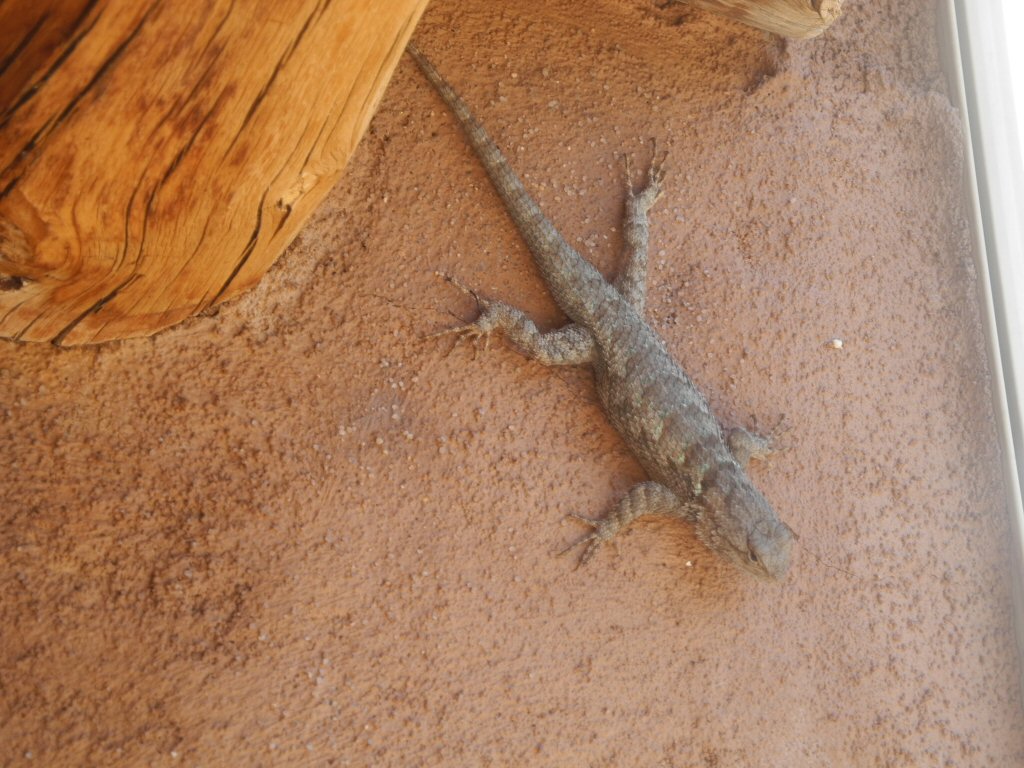
This little guy was on our casita when we returned from walking over to check on the igloo and telescope.
*-*-*
After dinner we walked out to the observing area to take some sky flats at dusk. Barry had noticed some brightness in the corners of the processed image and thought it might be due to the flat frames having been taken with the dew shield in place, back in Georgia. Since we weren’t using a dew shield here, he thought the chip might be illuminated differently.
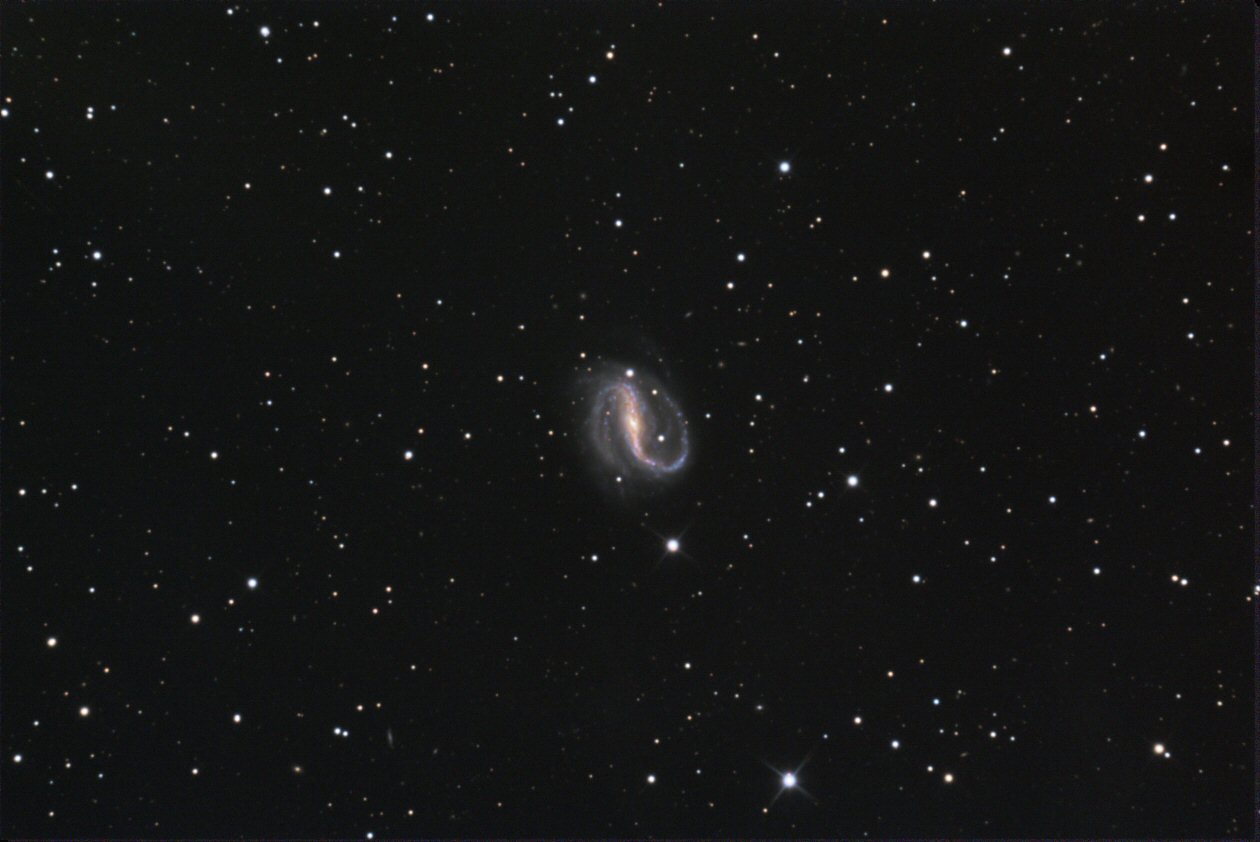
After that, we set up for our first image, NGC 7479, the Superman Galaxy. We watched the first images download, then headed back to our casita for s’mores! We wandered back out and checked on the imaging about an hour later and we had mouse problems again. Uh-oh. Barry went back to the casita and got the charging cable and that seemed to solve the problem. We went to bed and set the alarm. Unfortunately when Barry went out to start a new image, the mouse was belly up and he had to pull the plug to shut everything down. Tomorrow we need to go to Silver City to buy a new mouse and keyboard.
|
The Superman Galaxy (NGC 7479); Stack of forty 5-minute exposures; Celestron 14 HD Edge at F11; ZWO ASI094 One-shot color camera; Casitas de Gila in Gila, NM. 10/23/2019
*-*-*
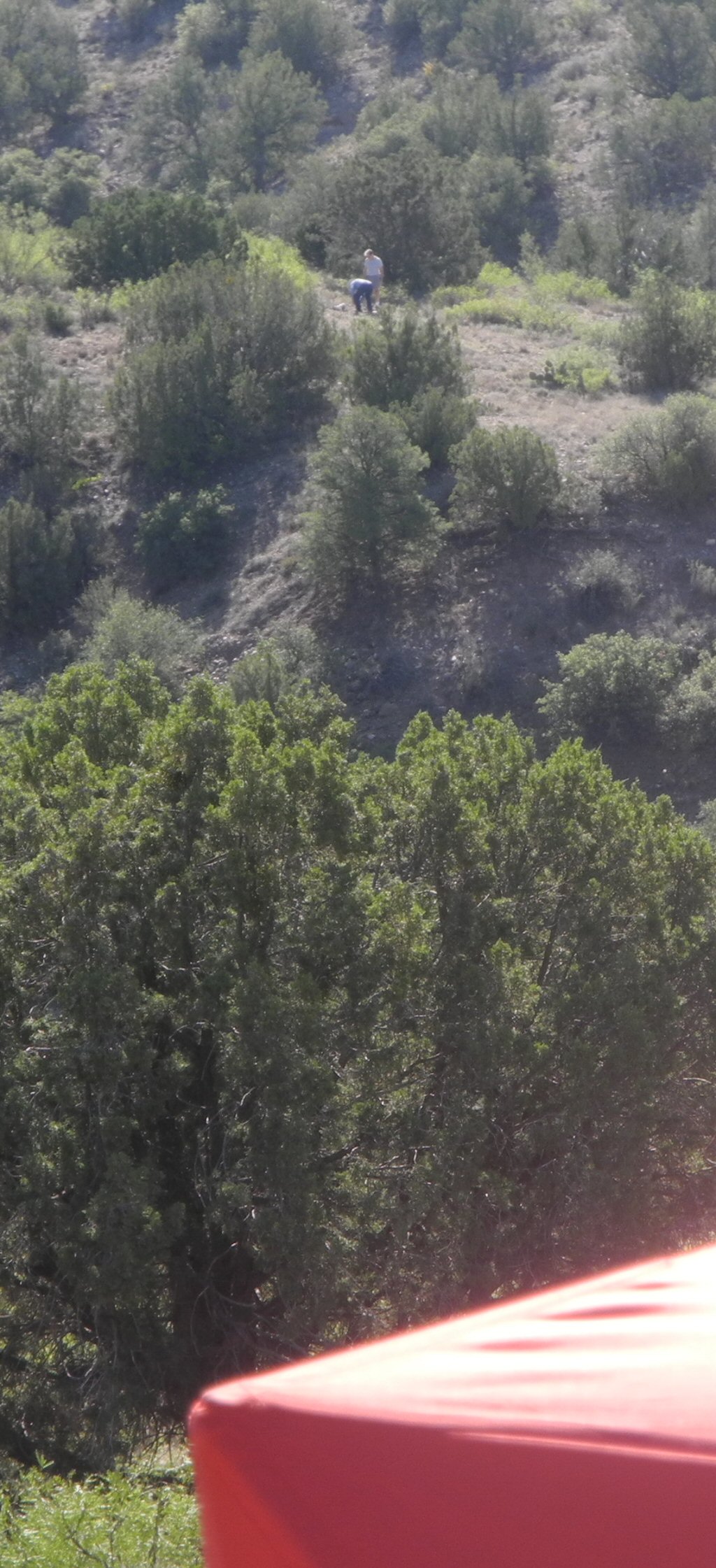
Thursday October 24 Casitas de Gila: Barry and Michael went up the mountain on the other side of the Gila River and set up an artificial star for Barry’s experiment of collimating on an artificial star. The "star" was a solar powered landscape light with a bezel in front of it with different size pinholes.
|
Barry and Michael setting the artifical star. It didn't really perform as hoped and continue to shimmer and dance during collimation.
*-*-*
After setting up the star, we drove to Silver City to buy a new mouse and keyboard. We had lunch at Wendy’s then shopping in Walmart for the mouse and keyboard combination. Then we drove back up to the Casitas. Because of the late start it was almost dinner time when we got home but we wanted to try out the new mouse and keyboard so we headed out to the observing field.
First we tried the wired mouse and keyboard, but had issues with the USB plugs on the stick power supply. So we used the USB extender cable to move the transmitter from our existing mouse and keyboard inside the igloo and that seemed to solve the problem of our existing wireless mouse and keyboard. We used remaining daylight to find the artificial star and set it as the home position so we could get back to it after dark. And finally we retook our flat frames because the ones we got last night were too dark. These turned out perfectly.
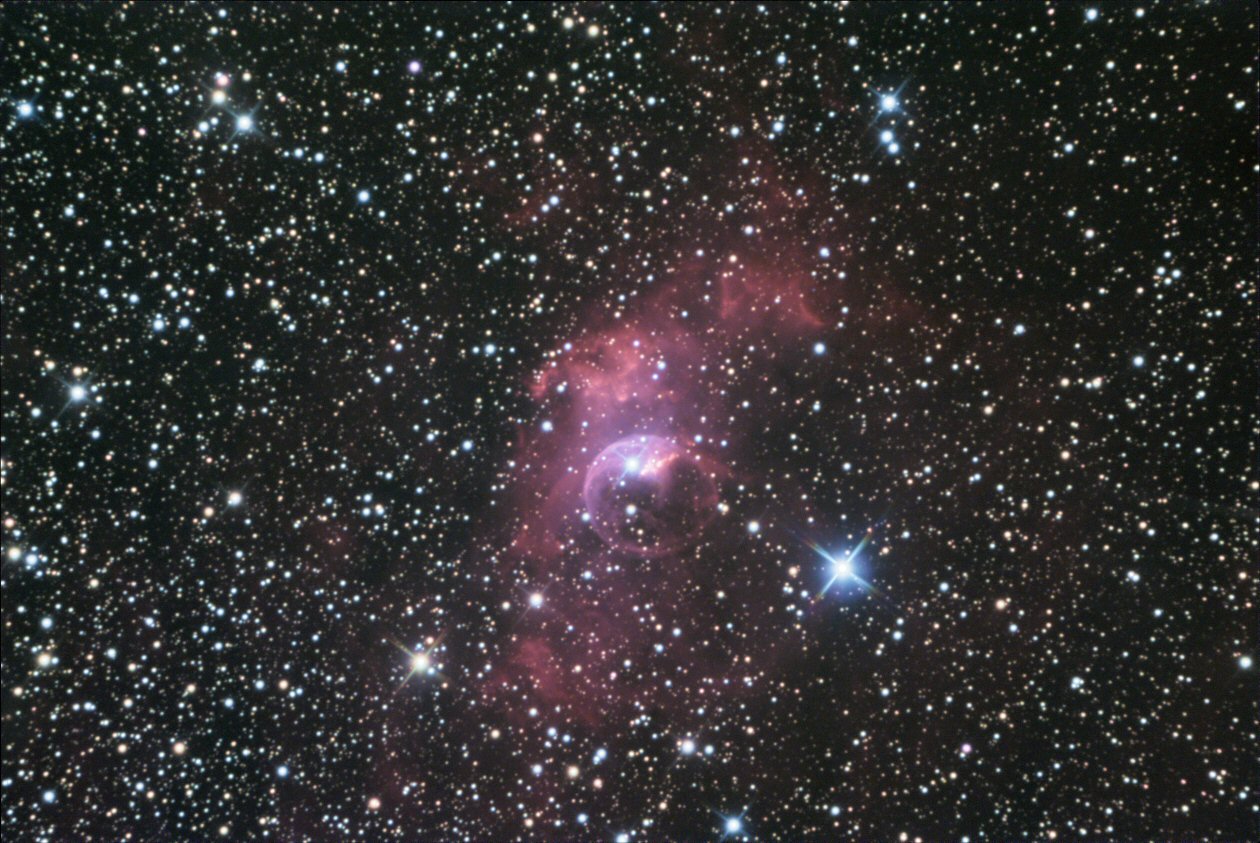
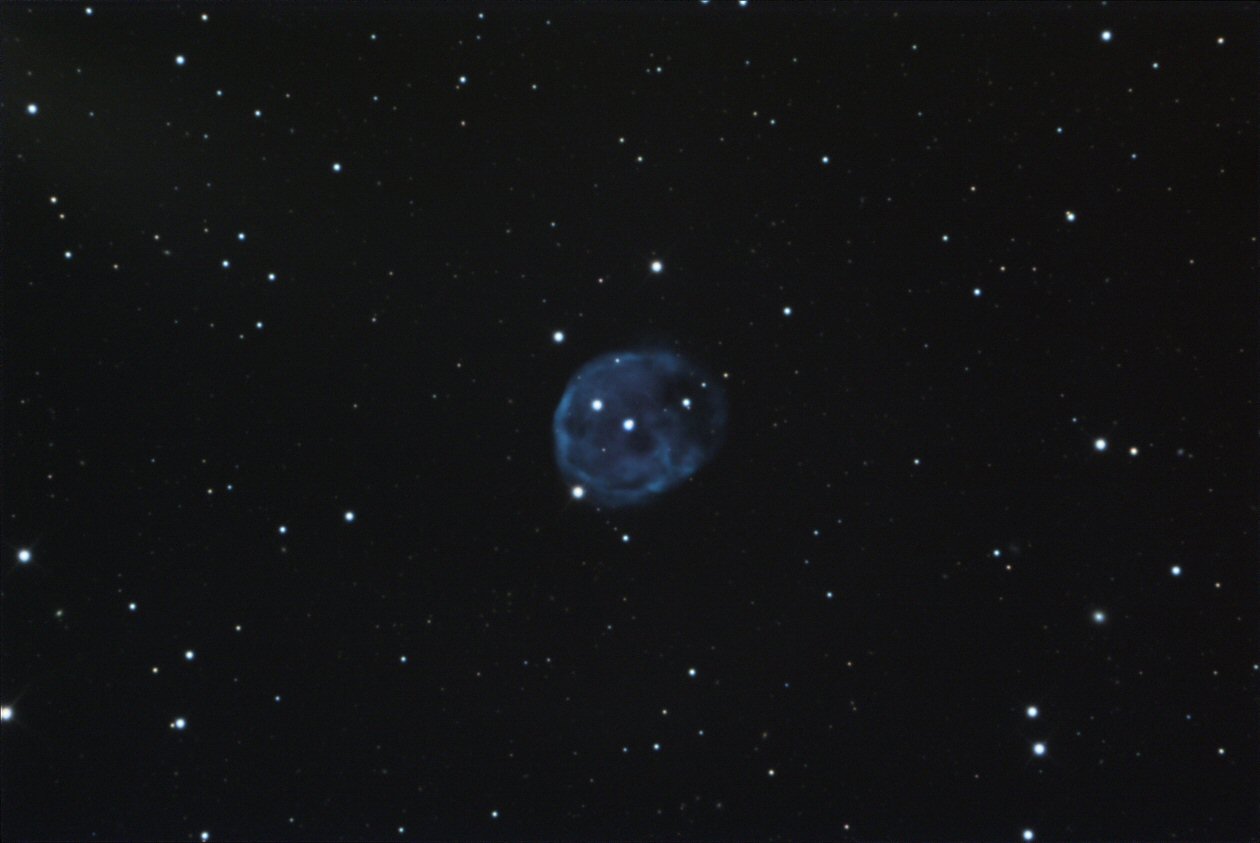
It was dark (and cold) by the time we went in to eat, dress warmer and get ready for the night's viewing. When we came back out we looked at the artificial star and found it to be dancing around just like real stars. Thinking it could be because it was early evening and there were still thermals, we moved on to start our images. First up NGC 7635 aka the Bubble Nebula. After getting it started we went in and went to bed. Barry got up around midnight, looked at the artificial star again (still dancing around) and then set up to image NGC 246, the Skull Nebula.
|
The Bubble Nebula (NGC 7635); Stack of thirty-six 5-minute exposures; Celestron 14 HD Edge at F11; ZWO ASI094 One-shot color camera; Casitas de Gila in Gila, NM. 10/24/2019
*-*-*
|
The Skull Nebula (NGC 246); Stack of thirty-five 5-minute exposures; Celestron 14 HD Edge at F11; ZWO ASI094 One-shot color camera; Casitas de Gila in Gila, NM. 10/24/2019
*-*-*
Friday October 25 Casitas de Gila: We had another busy day planned. We headed down to NMAV for an appointment to look at an older house. We had tracked down the owner the day before and she told us she had inherited it, along with several lots which she had already sold. She and her husband were clearing it out and fixing it up. It wasn’t finished, but she agreed to let us see it.
We left pretty early to make our appointments and as we passed by the open fields in Gila adjacent to the Mimbres river we saw a flock of wild turkeys. There were about a dozen and then a little further on we saw about a dozen wild boar or javelina. We also saw several several egrets.
The lot was a rectangular 5 acre lot. It had a large, older metal building, 2 functional wells and a septic tank. The house was a ranch style stucco which was older but they were doing a terrific job of refurbishing the interior. It had 4 bedrooms, 3 bathrooms, a nice living room area and some really neat touches in the kitchen. The cabinets were a blonde wood which had recently been sanded. The exterior stucco needed some work. All-in-all a cute house, but Barry was not enamored of the location relative to the roadside park lights and also not knowing what would be built on the lots to the immediate south, which had been sold but no construction started.
We left there and headed up to the Gateway Plaza truck-stop for lunch and to discuss what we liked/disliked about the property. After lunch we had an appointment to see some of the available lots in NMAV with a real estate agent. We looked at 3 and decided, if we were to buy, Block 1 Lot 11 held out the most promise as it was on the southern edge far away from the roadside stop. The downside was that it was also far away from the nearest electrical pole, meaning it would likely be expensive to run electricity.
After leaving the real estate agent we headed back to the Casitas to get ready for the night’s viewing. We started with Stephan’s Quintet and set up for three+ hours of exposure. We went to bed and Barry got up near midnight and started NGC 1068, another beautiful, but subtle spiral galaxy. Another terrific night of viewing!
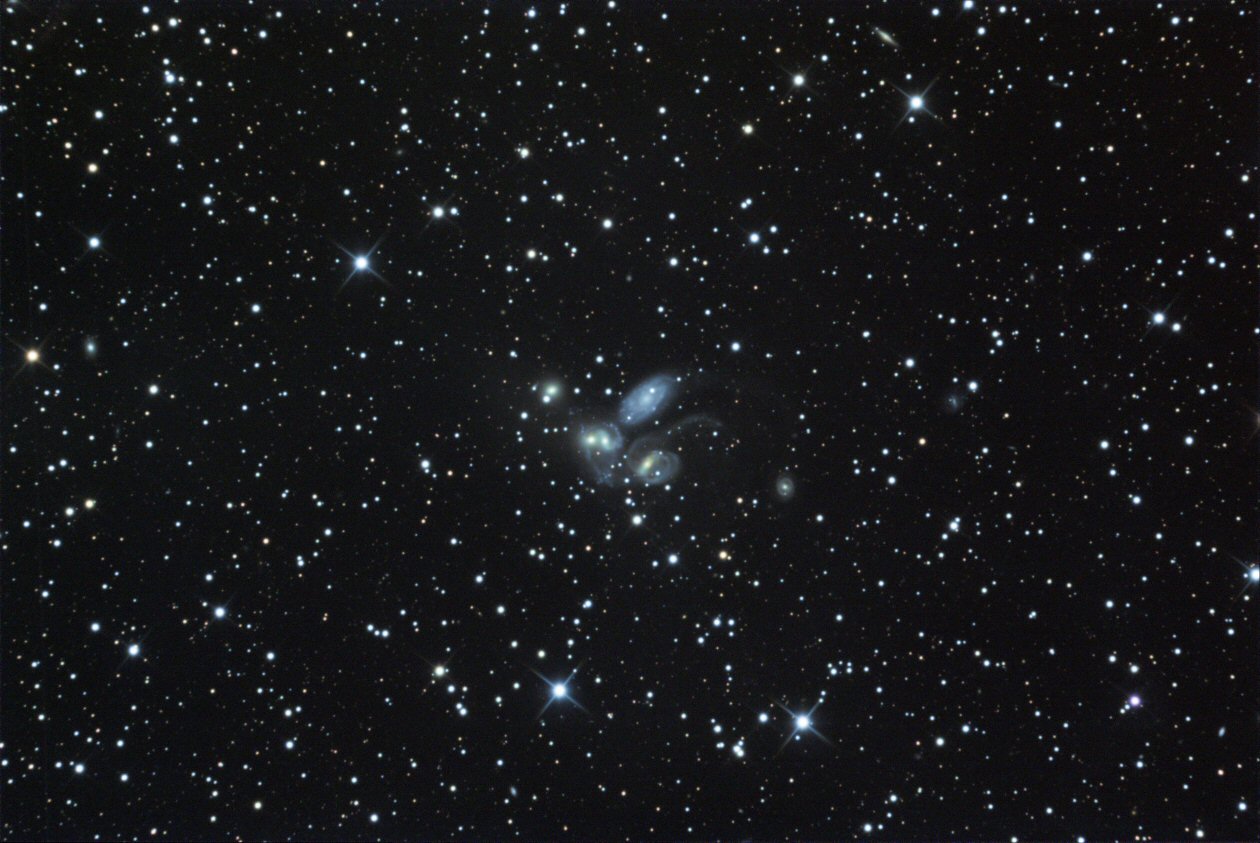
|
Stephan's Quintet; Stack of twenty-six 7-minute exposures; Celestron 14 HD Edge at F11; ZWO ASI094 One-shot color camera; Casitas de Gila in Gila, NM. 10/25/2019
*-*-*
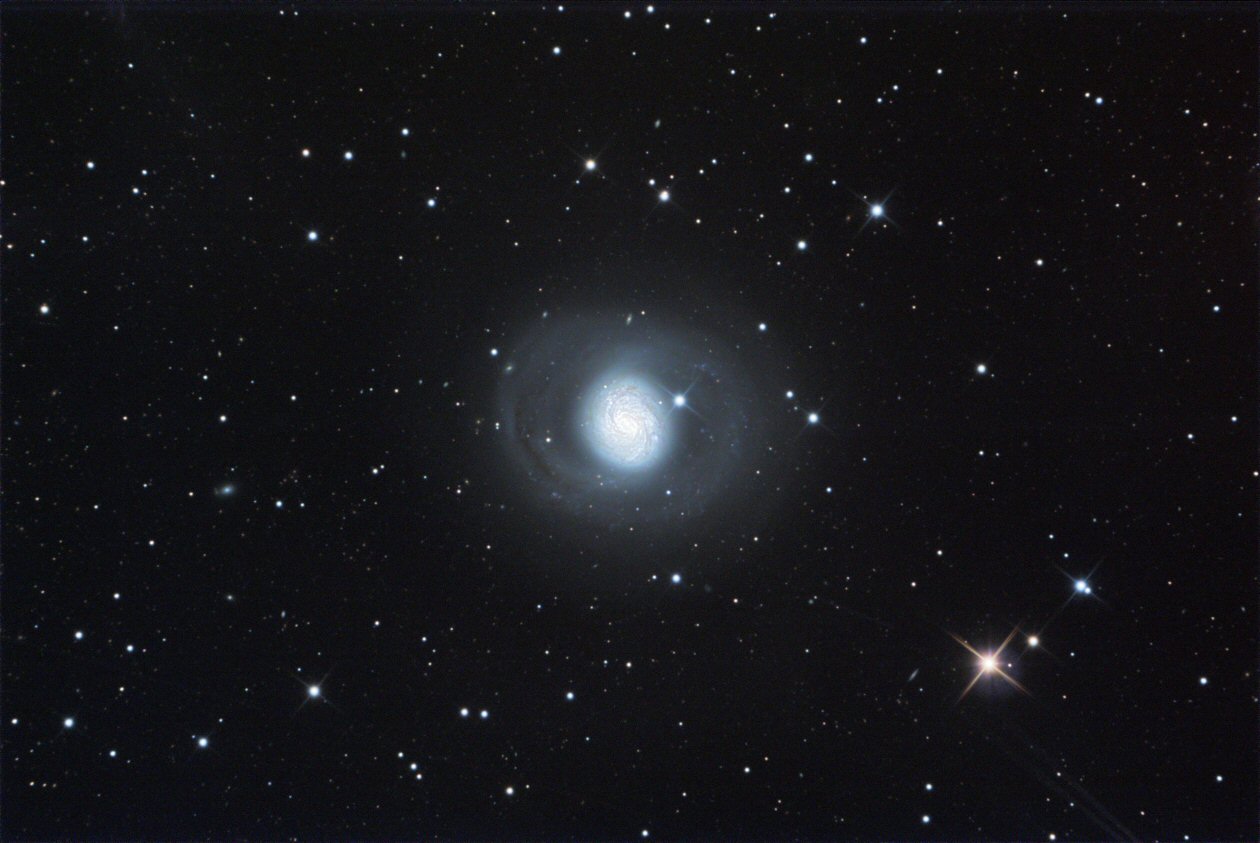
|
NGC 1068 or M-77 is a barred spiral galaxy about 47 million light-years away in the constellation Cetus. It is unusual because we are looking straight down on it; Stack of forty-eight 5-minute exposures; Celestron 14 HD Edge at F11; ZWO ASI094 One-shot color camera; Casitas de Gila in Gila, NM. 10/25/2019
*-*-*
Saturday October 26 Casitas de Gila: We had a leisurely day and stayed at the Casitas all day including a romantic picnic lunch overlooking the Mimbres River which had started showing Fall colors and a long nap in the afternoon.
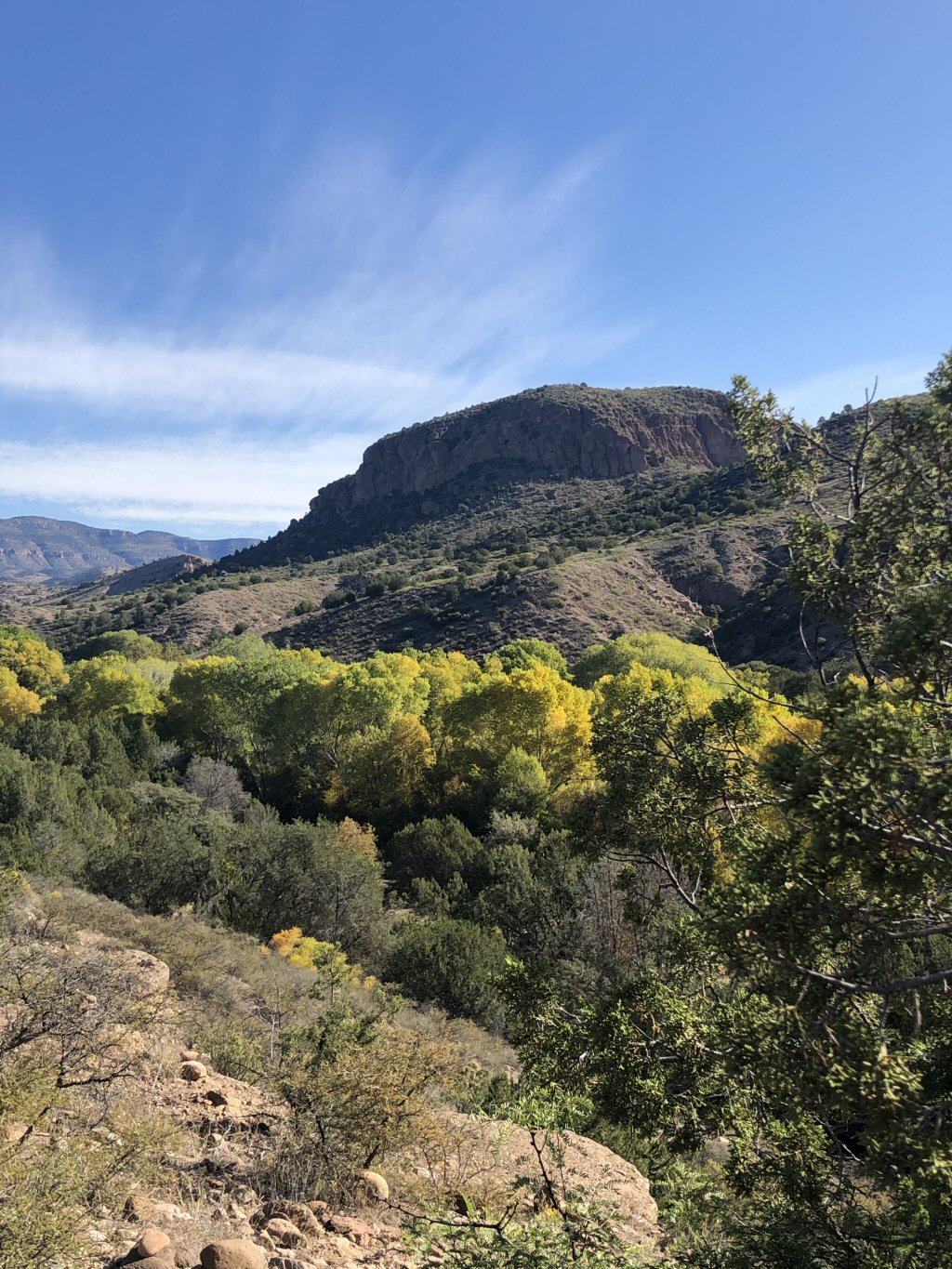
|
A view of the Mimbres River from our casita.
*-*-*
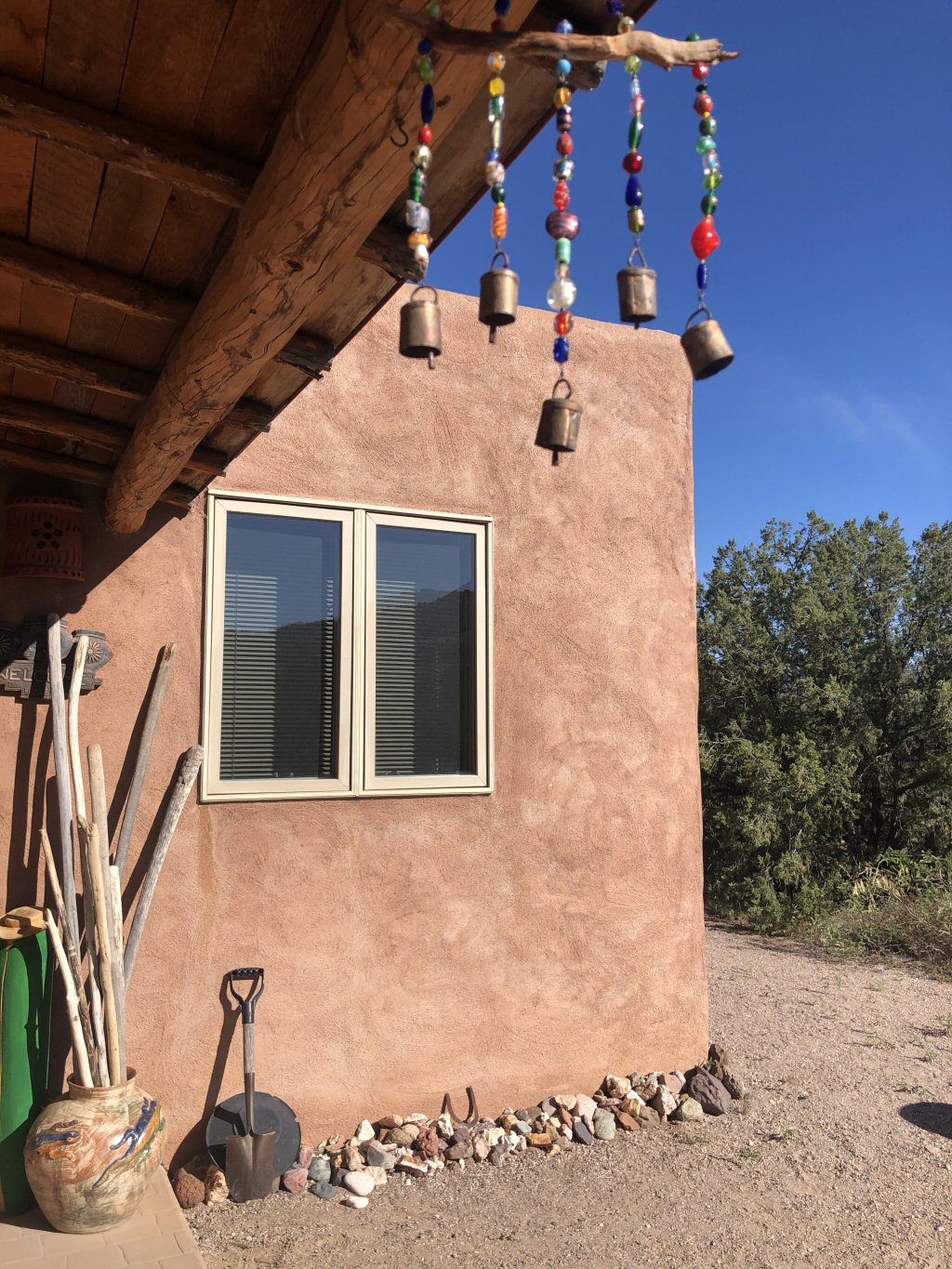
|
A windchime outside the door of our casita.
*-*-*
|
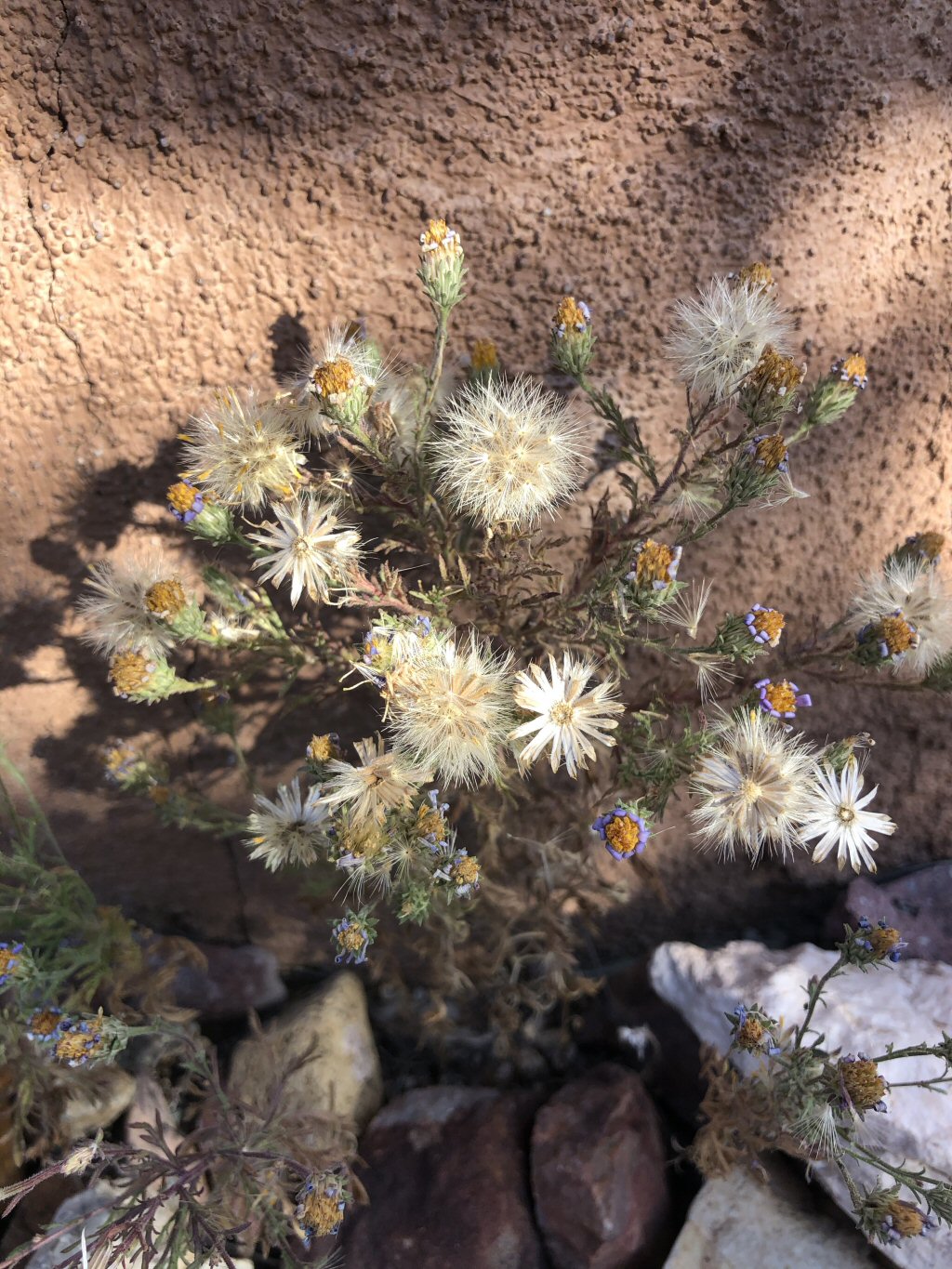
Some pretty seed puffs alongside the casita.
*-*-*
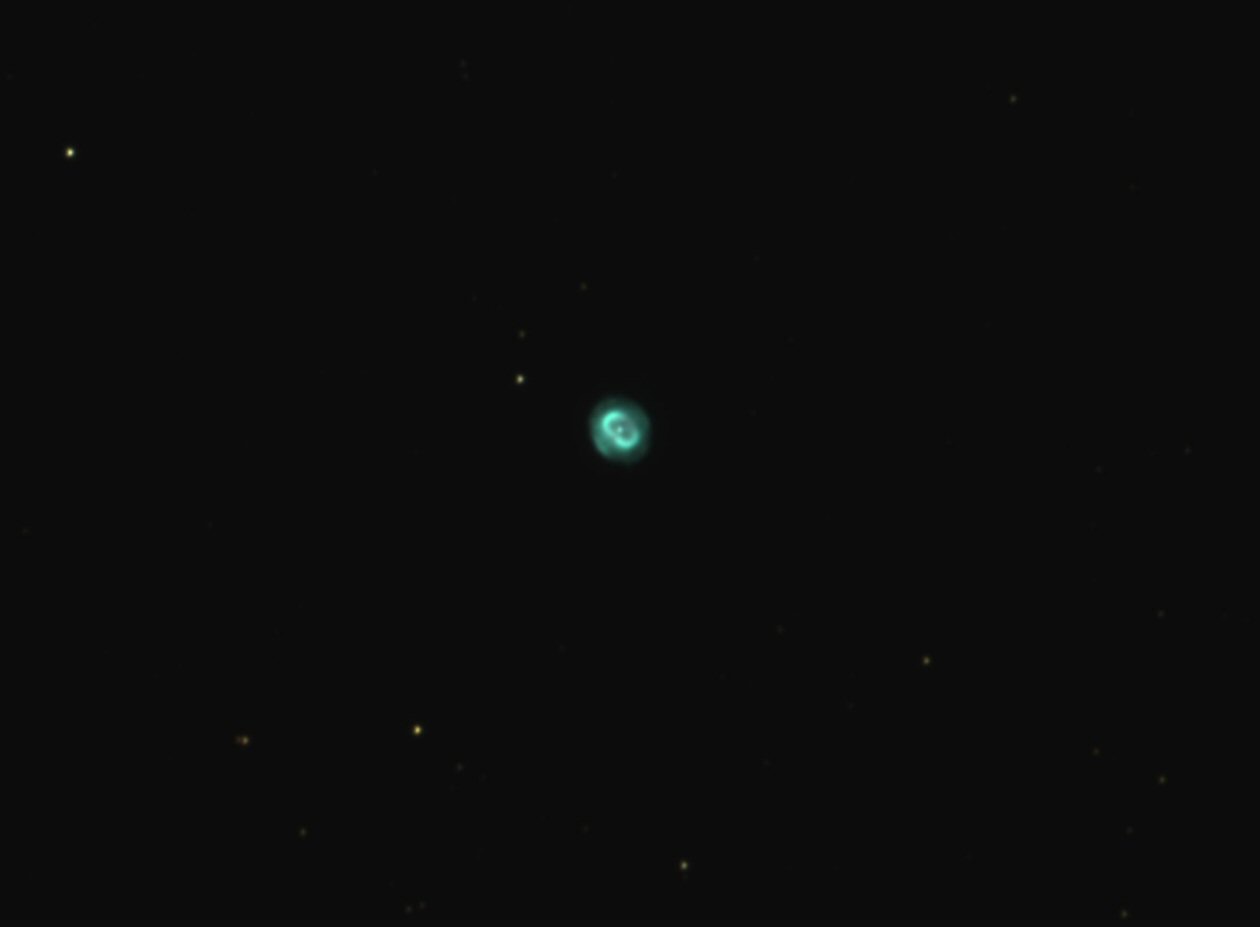
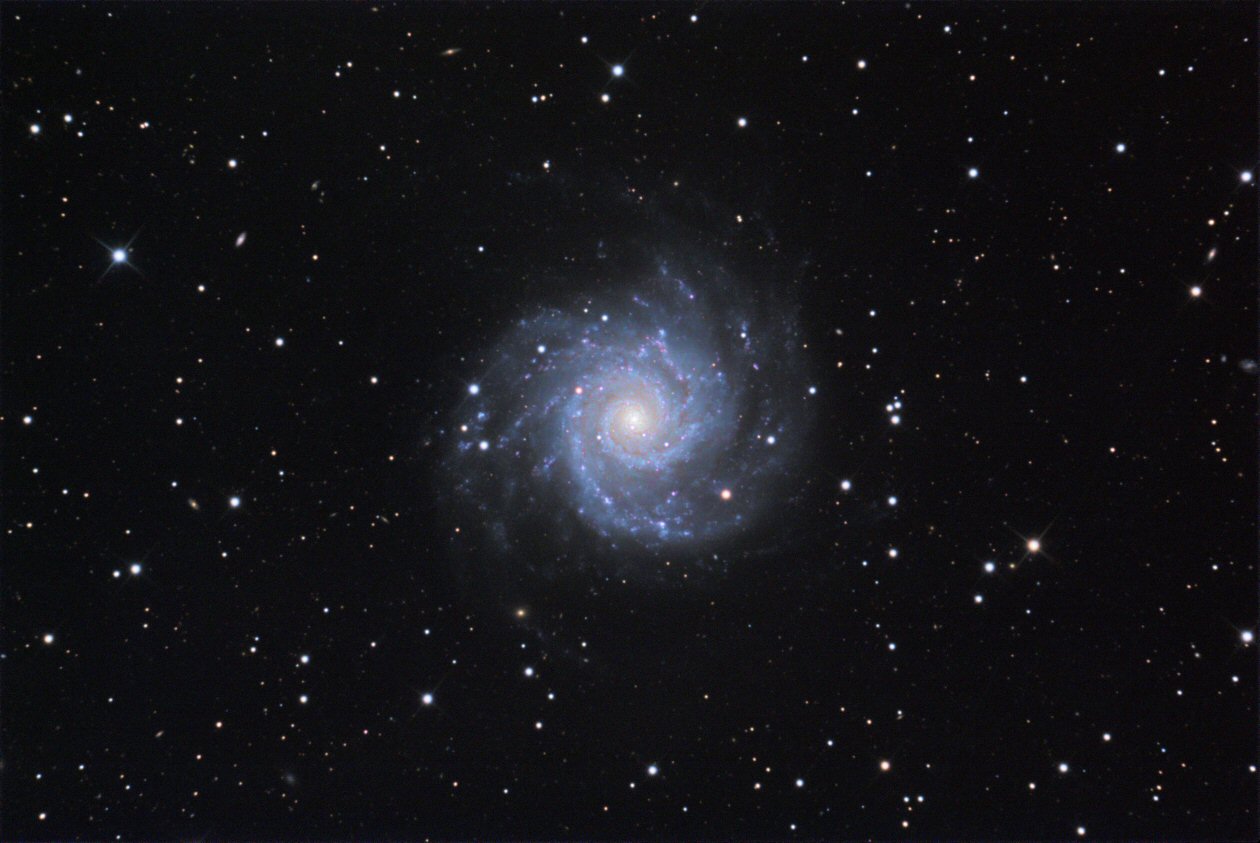
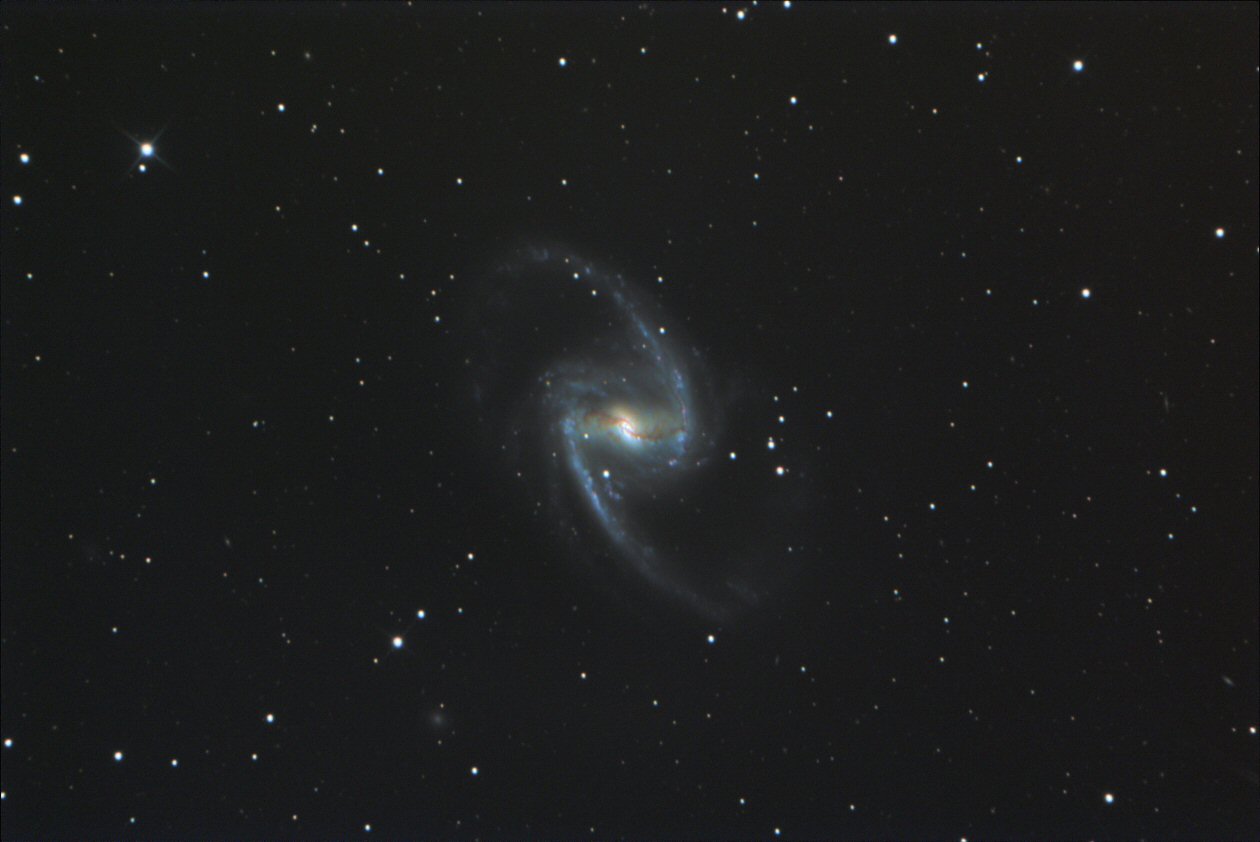
After dinner we got set up for observing and were going to do M-74 but had to wait for it to rise, so we started with NGC 7662, the Blue Snowball and stayed out during its 10 minutes of exposures. Then we set up for four hours of exposure on M-74 and went to bed. Barry got up later and started three and a half hours on NGC 1365, the Great Barred Spiral Galaxy, which Lori nicknamed the Bat’leth Galaxy.
|
The Blue Snowball (NGC 7662). Stack of fifteen 30-second exposures; Celestron 14 HD Edge at F11; ZWO ASI094 One-shot color camera; Casitas de Gila in Gila, NM. 10/26/2019
*-*-*
|
The Perfect Spiral (M-74) is a spiral galaxy in the constellation Pisces; Stack of forty-three 7-minute exposures; Celestron 14 HD Edge at F11; ZWO ASI094 One-shot color camera; Casitas de Gila in Gila, NM. 10/26/2019
*-*-*
|
NGC 1365 is The Great Barred Spiral Galaxy in the constellation Fornax; Stack of twenty-two 7-minute exposures; Celestron 14 HD Edge at F11; ZWO ASI094 One-shot color camera; Casitas de Gila in Gila, NM. 10/26/2019
*-*-*
Sunday October 27 Casitas de Gila: Today we drove down to join the folks at NMAV for lunch in Deming at an Italian restaurant called Marie’s. Early on, after breakfast, Barry processed our images from last night. They turned out beautifully.
We left for Deming around 11 for the 1 PM lunch and arrived about 15 minuntes early. It is a long drive from the Casitas, but we were very glad we went as we met a lot of other astronomer-residents. We found out a lot of information about what they do (astronomy-wise), the village in general and just about them, personally.
After we left, we stopped in Silver City for a grocery resupply and headed back up to Gila. We got home around 4:30, took a nap, ate a quick dinner before getting ready to start observing, but it was very windy. This was a blessing because we were both exhausted from the interrupted sleep of the last few nights and the long trip to Deming. Barry checked a few times during the night, but the wind never died down.
Monday October 28: Casitas de Gila: This was another full day without driving down the mountain which was very enjoyable. The weather all week, during the days has been 60-70 degrees F. Today was a little breezy, left over from last night and there is a strange smell in the air. Michael told us it was smoke from the California fires.
|
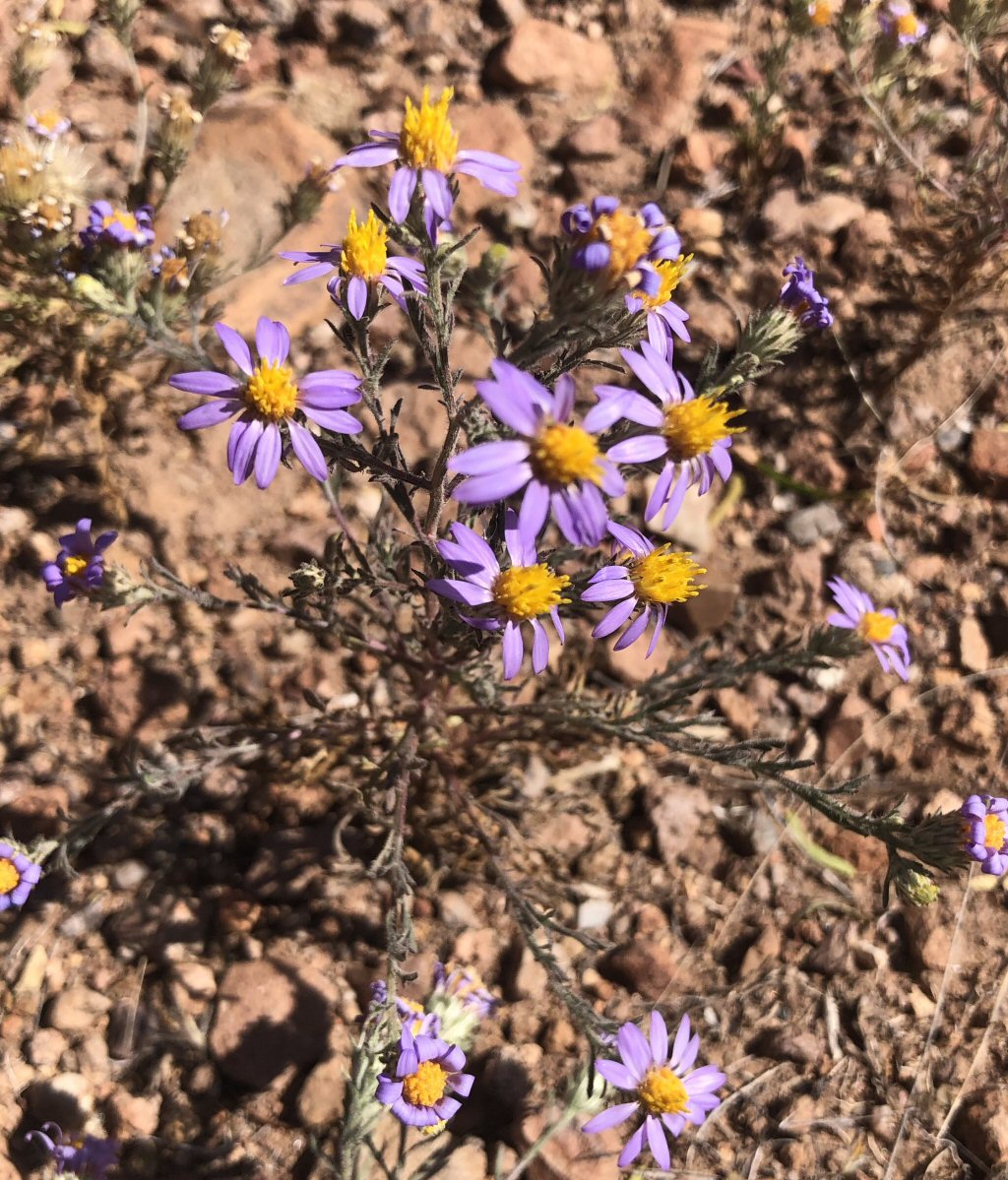
We had a leisurely lunch in the gazebo near our casita. Barry and I really enjoy the far ranging discussions we have over lunch and today was no different. Here are some flowers we found near the gazebo. Most of the blooming flowers were yellow but these were an eye-catching purple.
*-*-*
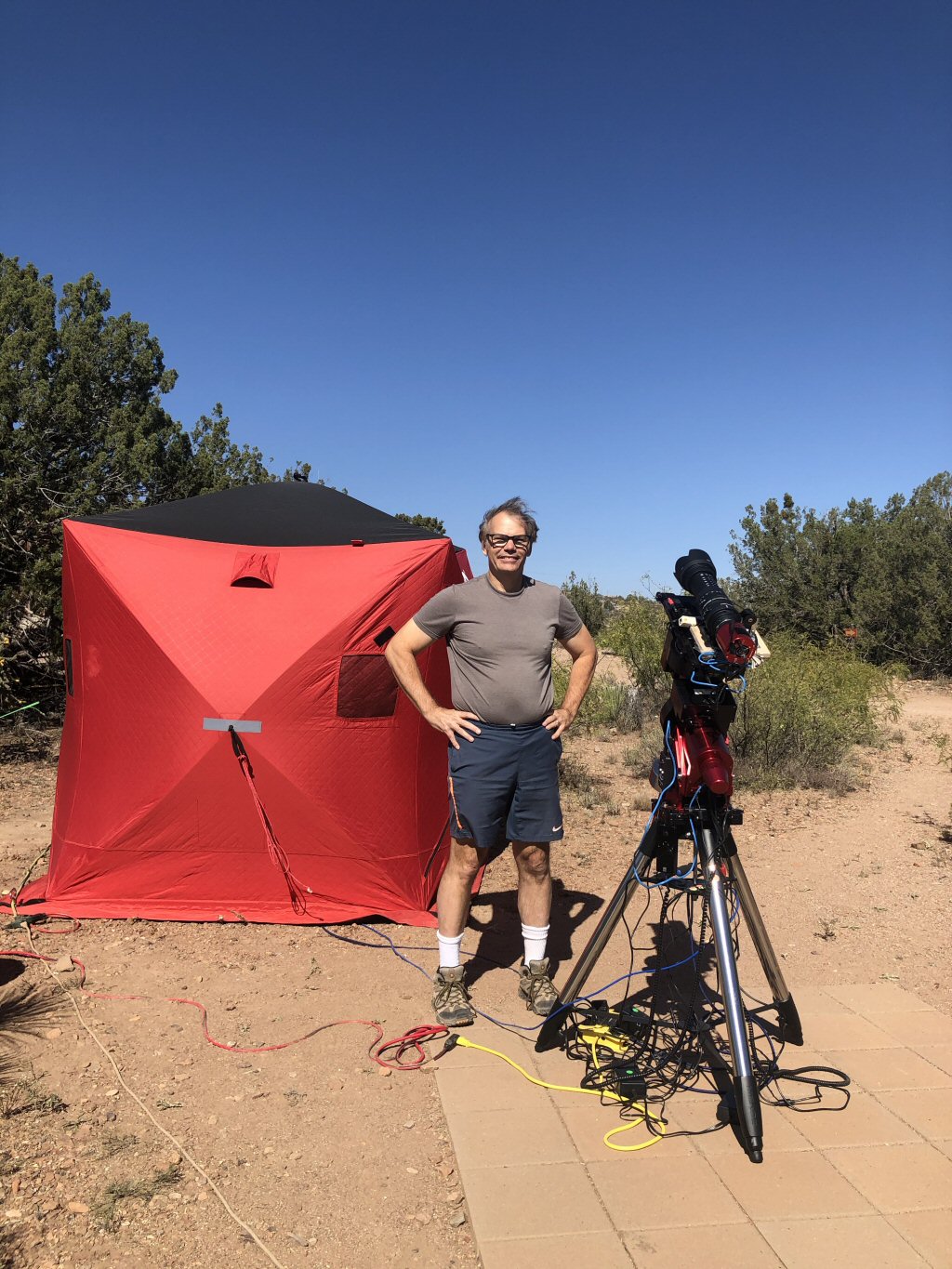
After some minor house keeping chores, we reconfigured the equipment for wide-field astronomy using a Sigma zoom lens and the ZWO ASI094 camera. We put the telescope on its travel board and put it into the van. After a nap we got ready for dinner and our evening’s astronomy activity. We wanted to get out early to focus on the distant hill in daylight so we could get a rough focus. And, as promised, the wind died down by 6:30 PM or so.
|
Barry with the setup with the Sigma 50-500 F6.3 Zoom lens for wide field imaging.
*-*-*
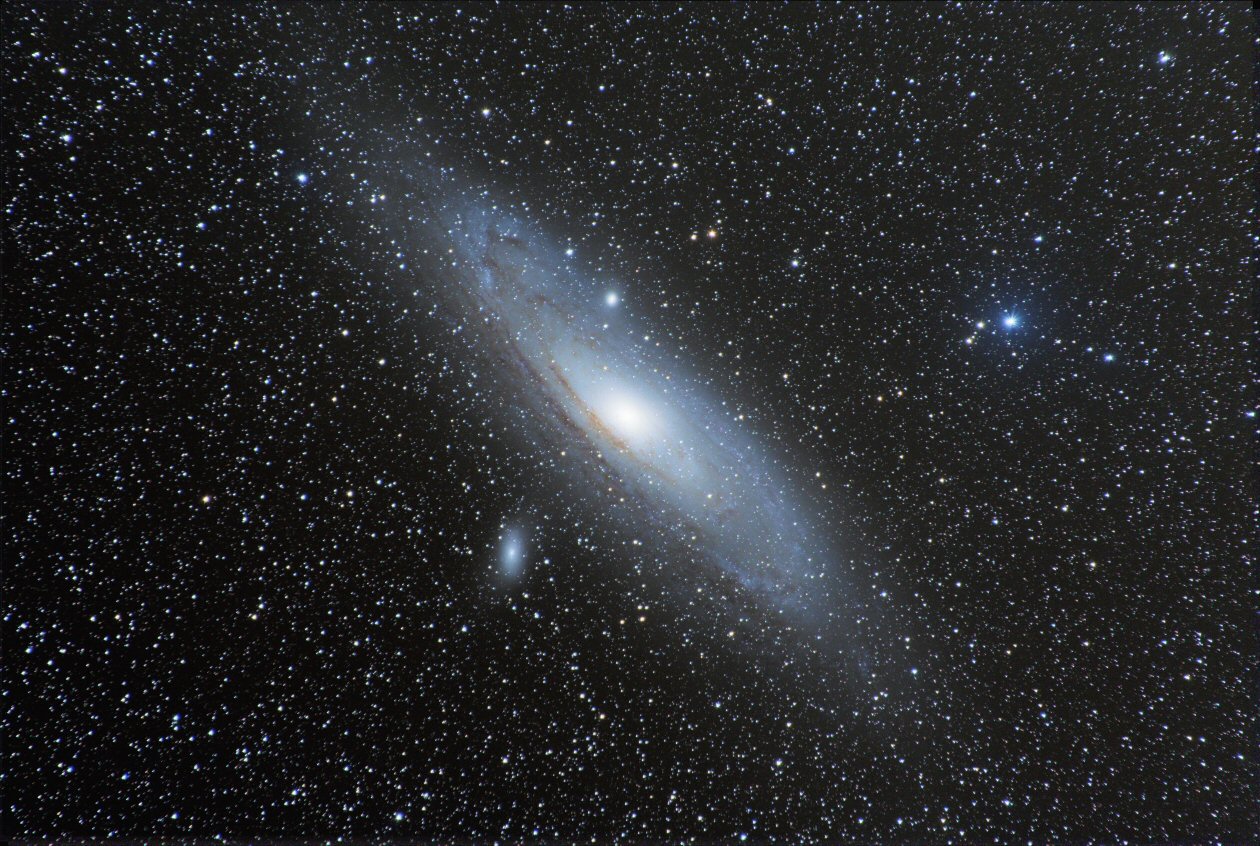
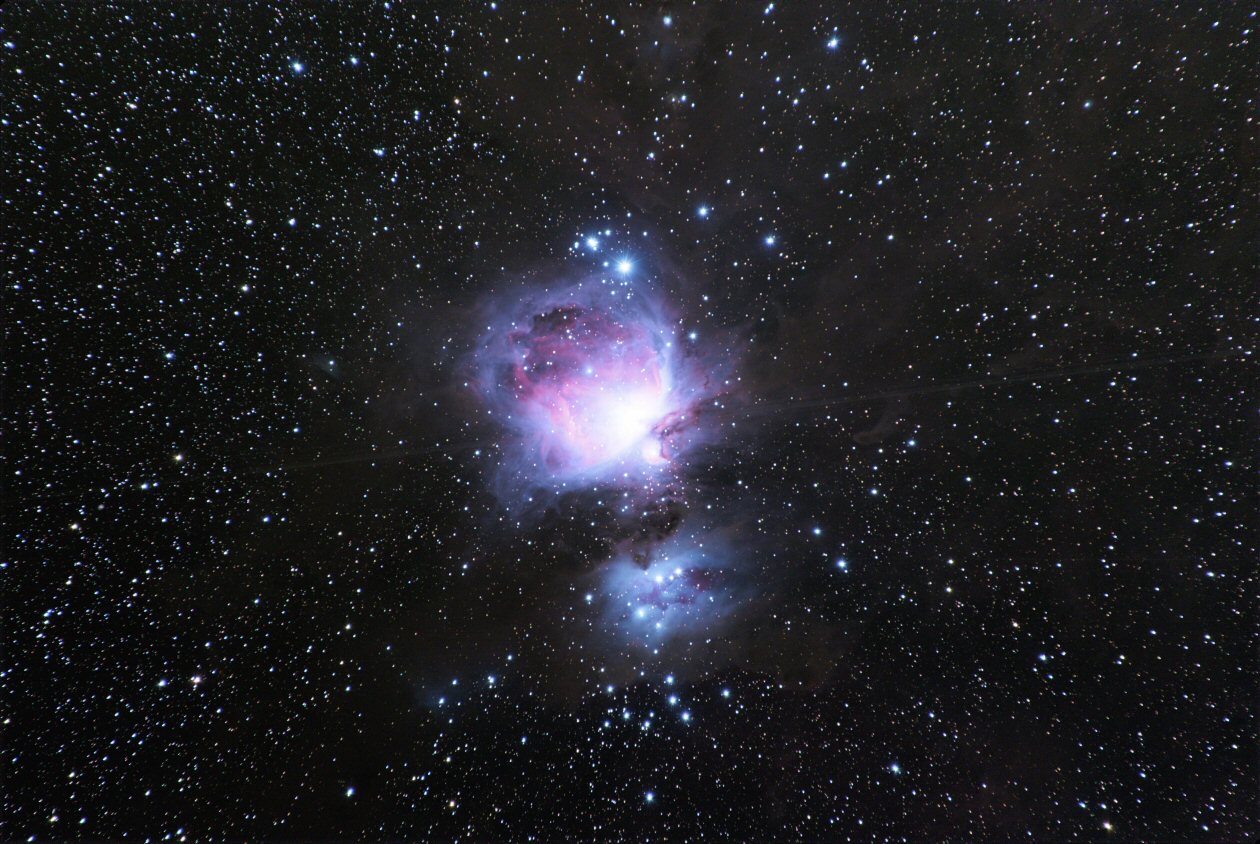
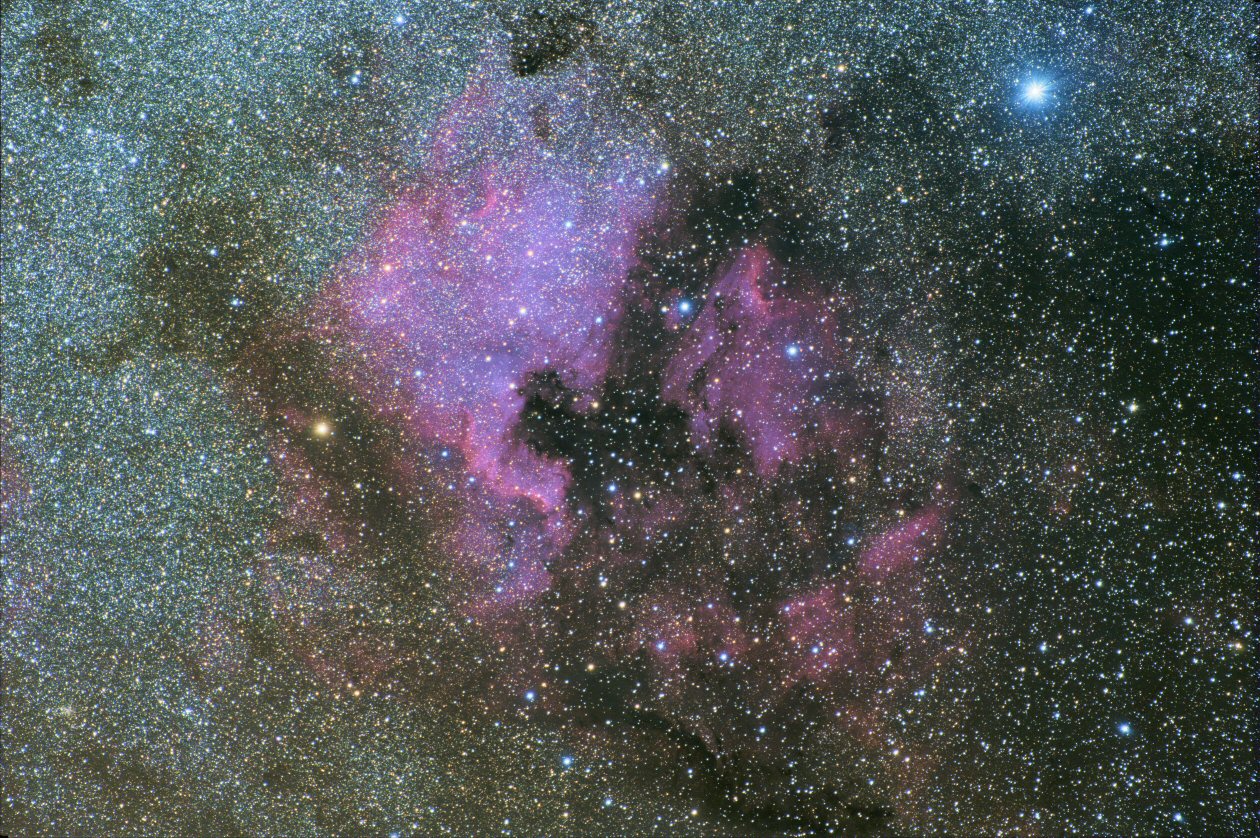
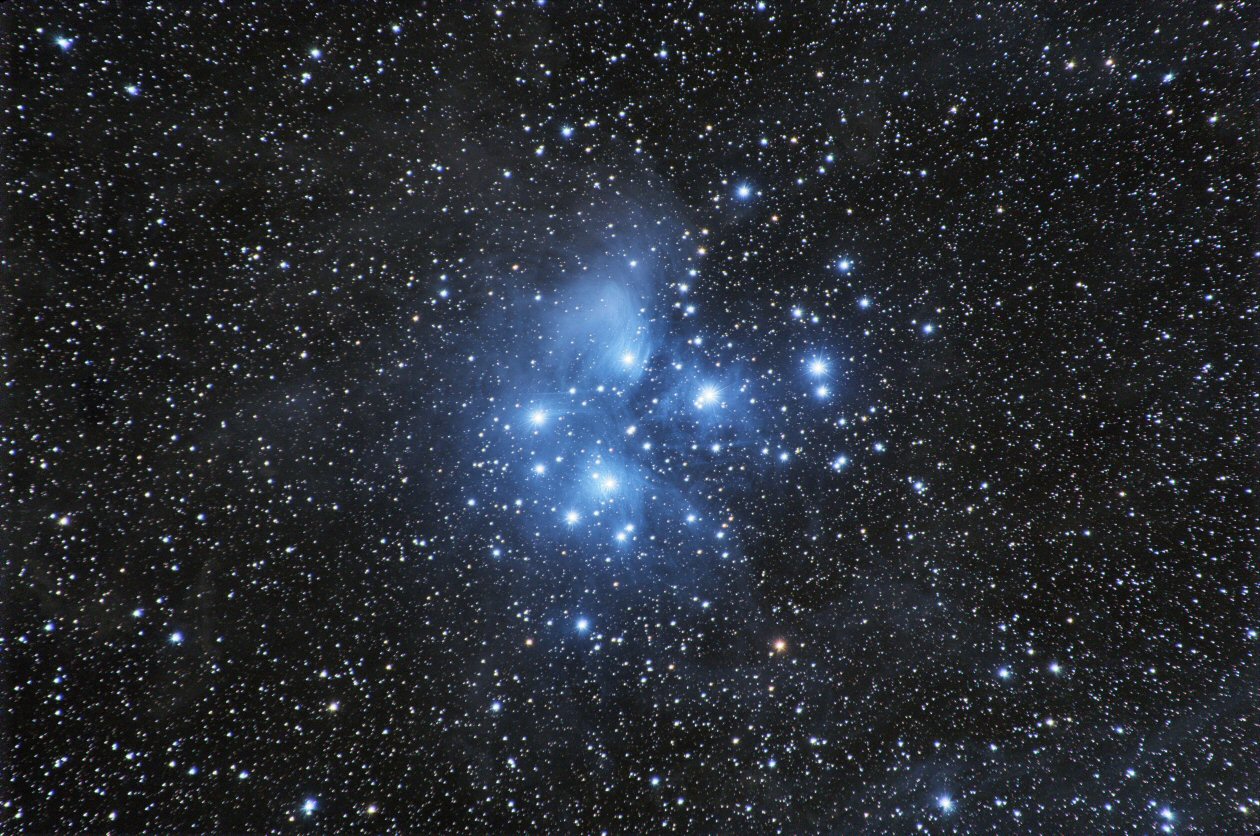
After dinner of homemade burgers and Ruffles potato chips, we went out to focus the camera and set up for imaging. We started out planning to image the North American and Pelican Nebula in a single image, but had issues with slewing to it, image linking and focusing. As it was past its transit time, we abandoned it and moved on to M-31, the Andromeda Galaxy. We started the exposures on it and went to bed. Barry went back out around midnight and set up for the Pleiades, M-45, and took several hours of that star grouping. When he went back out he set up and took twelve 5 minute images of the Orion Nebula. It was interesting - every one of the Orion images had a satellite passing through the center of it.
|
The Andromeda Galaxy (M-31); Stack of nineteen 5-minute exposures; Sigma 50-500 mm F6.3 zoom lens at 500 mm; ZWO ASI094 One-shot color camera; Casitas de Gila in Gila, NM. 10/28/2019
*-*-*
|
The Orion Nebula (M-42) with a cameo by the Running Man; Stack of twelve 5-minute exposures; Sigma 50-500 mm F6.3 zoom lens at 500 mm; ZWO ASI094 One-shot color camera; Casitas de Gila in Gila, NM. 10/28/2019
*-*-*
Tuesday October 29 Casitas de Gila: Another leisurely day scheming about the possibility of purchasing land in NMAV and how that might unfold. Again we had no trips down the mountain and since the equipment was already configured for wide field, no tasks to be completed there. Barry did work on processing the images from last night, but we quickly came to the conclusion that we needed to have some flat fields to remove the vignetting in the photos. So we decided we would take them as the sun was setting later in the day.
After dinner, we set up to take the flat field images. These are short images taken against the relatively uniformly illuminated sky. We needed to take a set for both 500 mm and 300 mm since we were imaging at both those focal lengths. There is a very short window as the sun is setting where the lighting is correct for the desired 2 second exposure. For the 500 mm focal length we covered the lens with a white t-shirt stretched taut. This darkens the image, slightly. After taking the 20 images, we quickly pulled the t-shirt, changed the zoom level to 300 mm, taped it so it couldn’t shift and had about 5 minutes to spare before we hit the perfect lighting for the 2 second exposure at that focal length. We also took 20 images at 300 mm. These sets will be individually averaged and then combined with the images we take.
Then we started setting up for the North American and Pelican Nebulas. We were taking images by 7:30 PM and headed back to have s’mores and hang out until 10:30 PM when they would be done. Barry kept one eye on the World Series (on his IPAD) and we read for a while.
After the North American and Pelican Nebulas image finished up we walked out, changed the zoom setting to 500 mm, re-taped the lens and started another round of images on the Pleiades. We discovered the ones from last night were impacted by smoke in the atmosphere. We went to bed and Barry got up later to shut down the equipment.
|
The North American and Pelican Nebulas; Stack of thirty-six 5-minute exposures; Sigma 50-500 mm F6.3 zoom lens at 300 mm; ZWO ASI094 One-shot color camera; Casitas de Gila in Gila, NM. 10/29/2019
*-*-*
|
The Pleiades or Seven Sisters star cluster (M-45). It is known as Subaru in Japan; Stack of twenty-six 7-minute exposures; Sigma 50-500 mm F6.3 zoom lens at 500 mm; ZWO ASI094 One-shot color camera; Casitas de Gila in Gila, NM. 10/29/2019
*-*-*
Wednesday October 30 Casitas de Gila: This is our last day here. We are dragging from the continued lack of sleep. Barry has spent most of the morning processing or reprocessing images with the new flat fields from last night and removing individual frames that seemed to be impacted by smoke, wind or other factors.
|
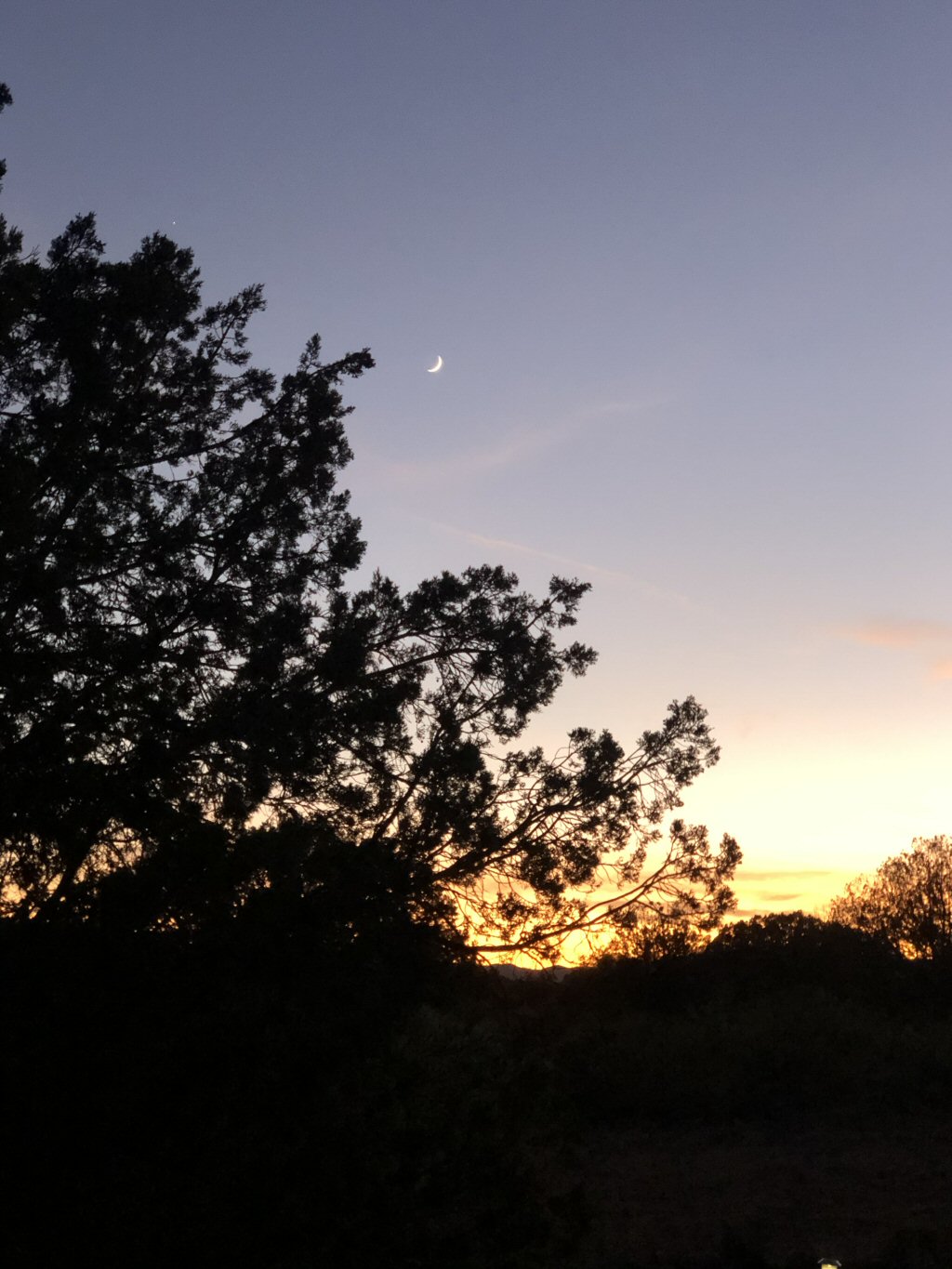
Moonrise with Jupiter; iPhone camera; Casitas de Gila in Gila, NM. 10/30/2019
*-*-*
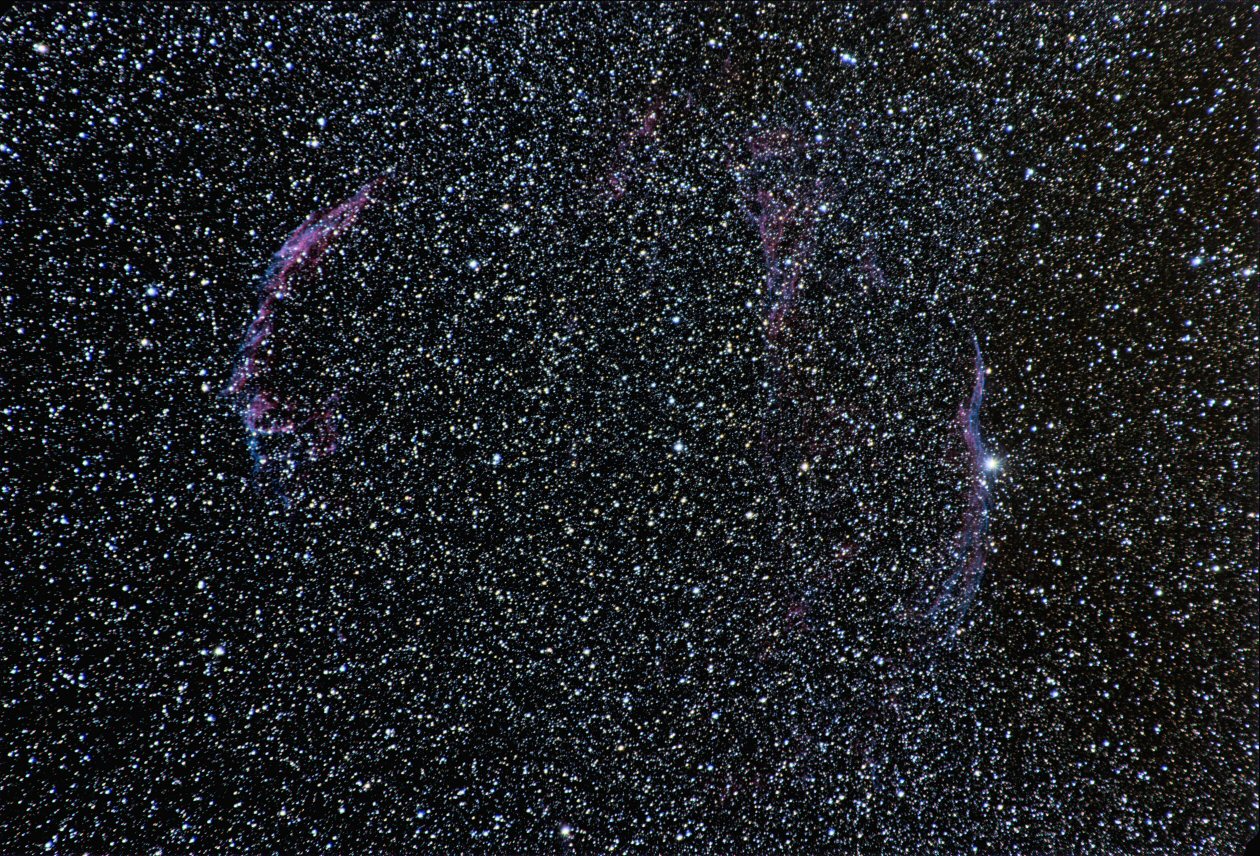
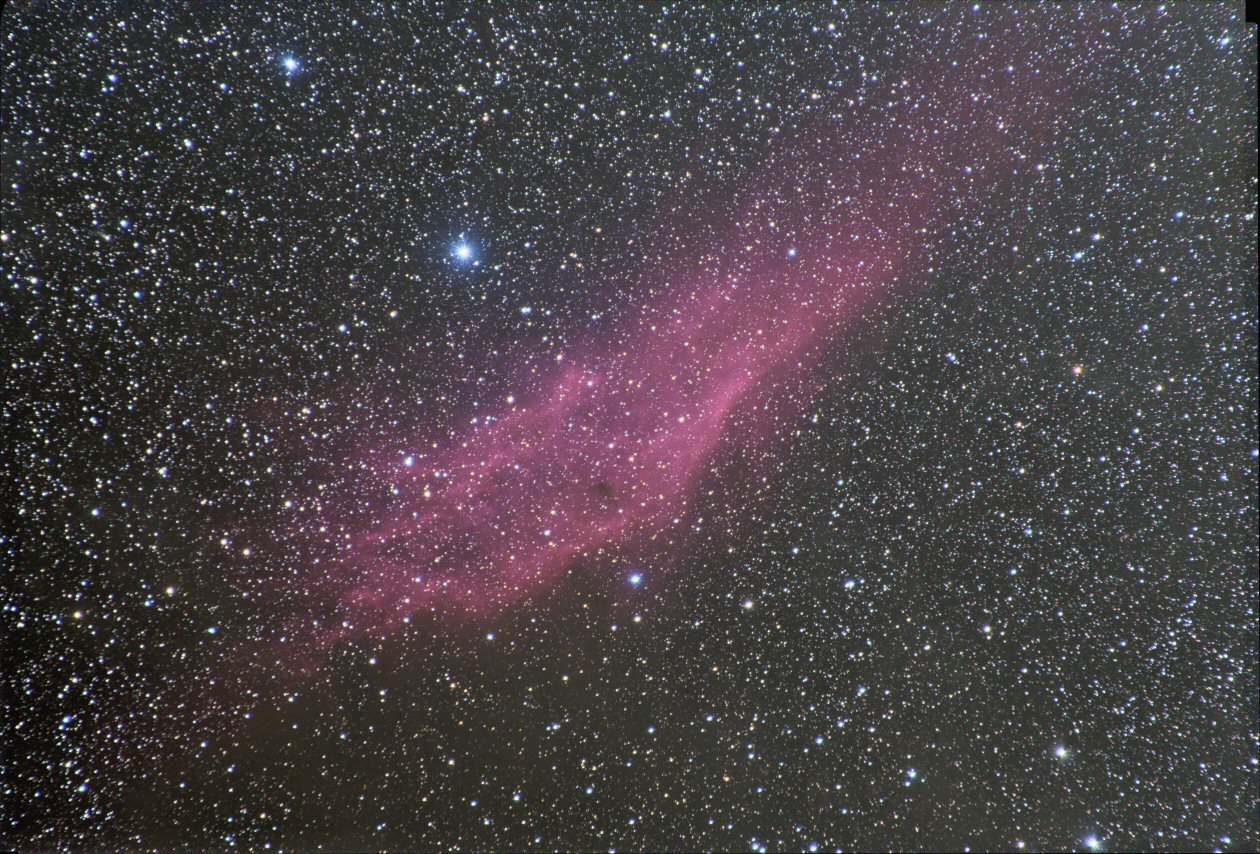
For the evening we imaged the Cygnus Loop and the California Nebula. When we started Cygnus Loop, the first image was awful, the second one was great and the third one awful. So we shut down the series and went out to examine the setup. Barry tightened down the lens shoe and we taped the lens to to the mount to stabilize it.
We started another series. The images looked awful again with elongated stars. We we shut down again. Barry had turned on ProTrack after his successful T-Point run of the previous evening, but we had changed the focal length and had not been able to do a closed loop slew to the image, so we thought maybe ProTrack was the culprit and turned it off then started the series again. That solved the problem and we went back to our casita and went to bed. Barry went out to start the California Nebula after the first set of images completed.
|
The Cygnus Loop is a large supernova remnant in the constellation Cygnus. Some arcs of the loop are known as the Veil Nebula; Stack of thirty-five 5-minute exposures; Sigma 50-500 mm F6.3 zoom lens at 500 mm; ZWO ASI094 One-shot color camera; Casitas de Gila in Gila, NM. 10/30/2019
*-*-*
|
The California Nebula (NGC 1499) Stack of forty-three 5-minute exposures; Sigma 50-500 mm F6.3 zoom lens at 500 mm; ZWO ASI094 One-shot color camera; Casitas de Gila in Gila, NM. 10/30/2019
*-*-*
We were at the Casitas de Gila for nine nights and had beatiful clear DRY skies for eight of them and managed to get fifteen amazing photographs. Some of the objects were imaged twice! This is why we want to move to New Mexico.